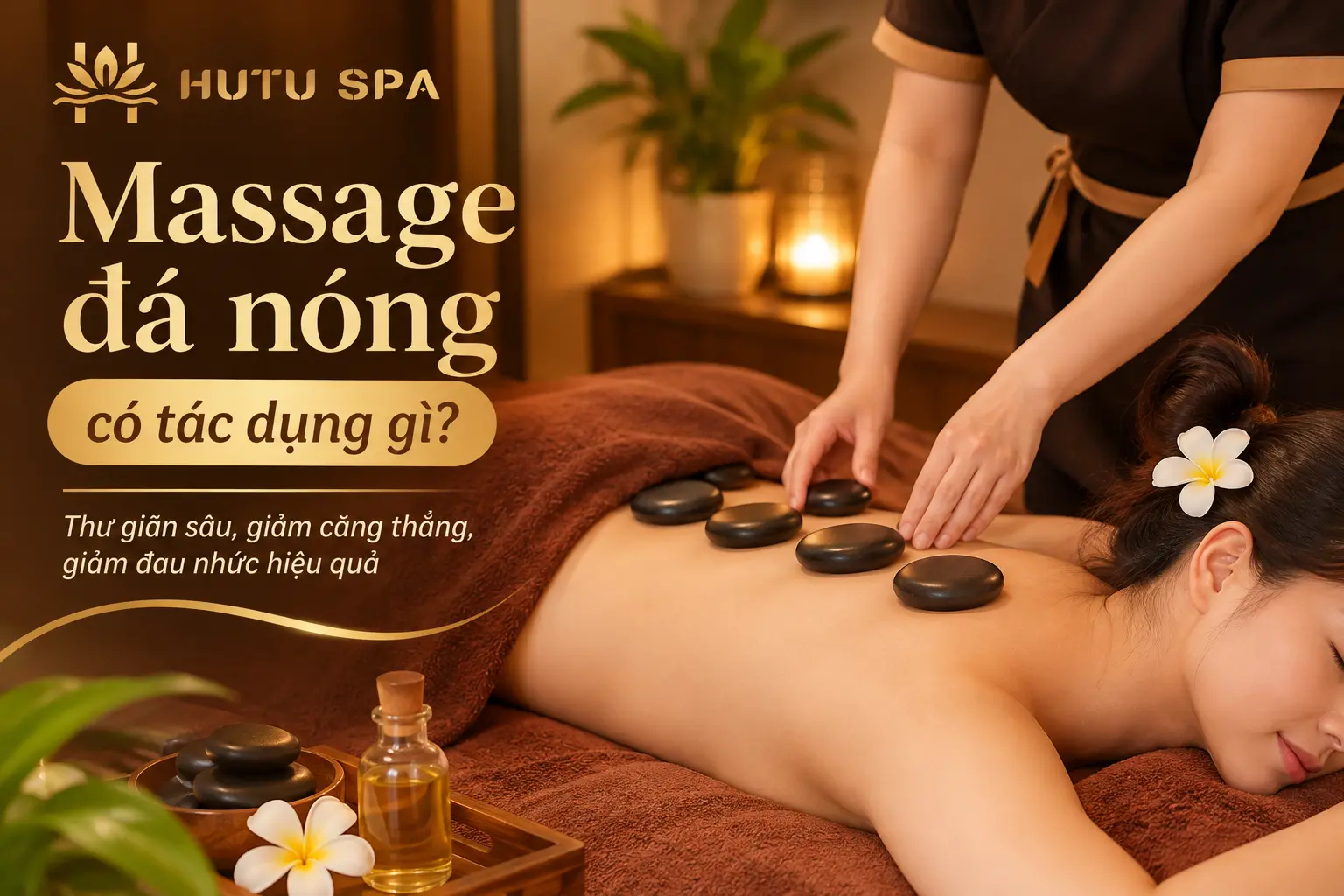
The main benefits of a hot stone massage are that the warmth helps your muscles relax quickly, eases tension in the back, neck and shoulders, calms the mind and makes it easier to fall asleep. These are short-term effects, felt most clearly during and right after the session. This article brings together 9 practical benefits, shows which ones are backed by research and which are just marketing, and explains who should try it and who should talk to a doctor first.
Quick summary
- Most noticeable effect: muscles soften quickly, stiffness eases, and you feel a pleasant warmth and drowsiness.
- Supported by research (mostly on massage in general and heat therapy): short-term relief of back pain and neck and shoulder pain, lower stress, better sleep.
- Research on hot stones specifically is still limited: a 2019 randomized trial found improved sleep quality in dialysis patients after 12 sessions.
- What it cannot do: help you lose weight, burn fat, "detox", cure bone or joint disease, or replace medical treatment.
- Take extra care if you are: pregnant, taking blood thinners, diabetic or have reduced skin sensation, or have an open wound or a fresh injury.
How a hot stone massage affects the body
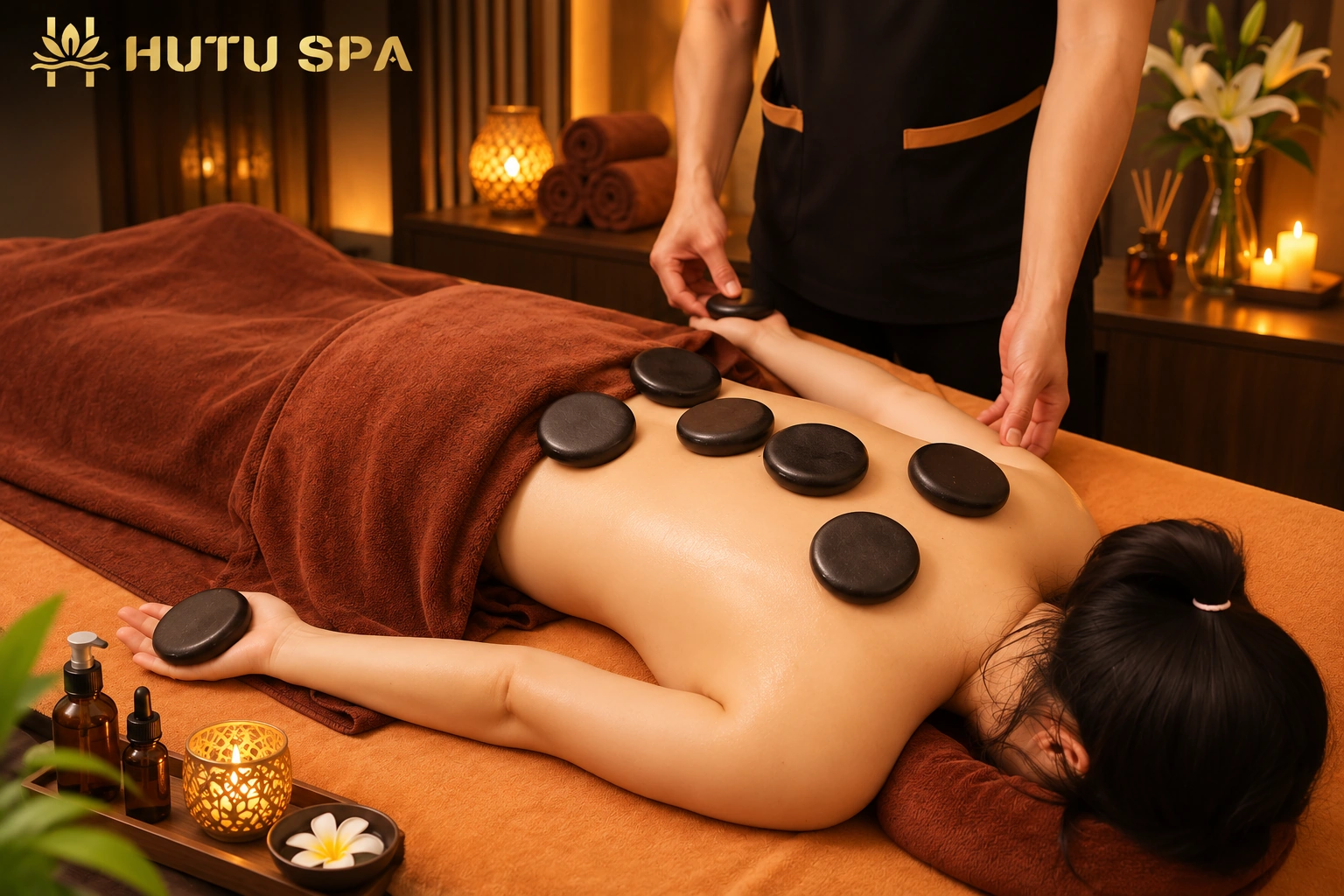
Hot stone massage combines hands-on oil massage with flat, smooth stones that have been warmed. If you are not sure what a session looks like, Hutu Spa has a separate guide explaining what a hot stone massage is, how it works and how it feels to lie on the stones. Here we focus on the question that matters more to many people: what does the warmth of the stones actually do for your body.
Therapies using warm stones have existed in many traditional medicine systems. The modern version common in spas today traces back to LaStone Therapy, introduced in 1993, which combines hot stones with Swedish massage and deep tissue techniques.
Why basalt stones are used to hold heat
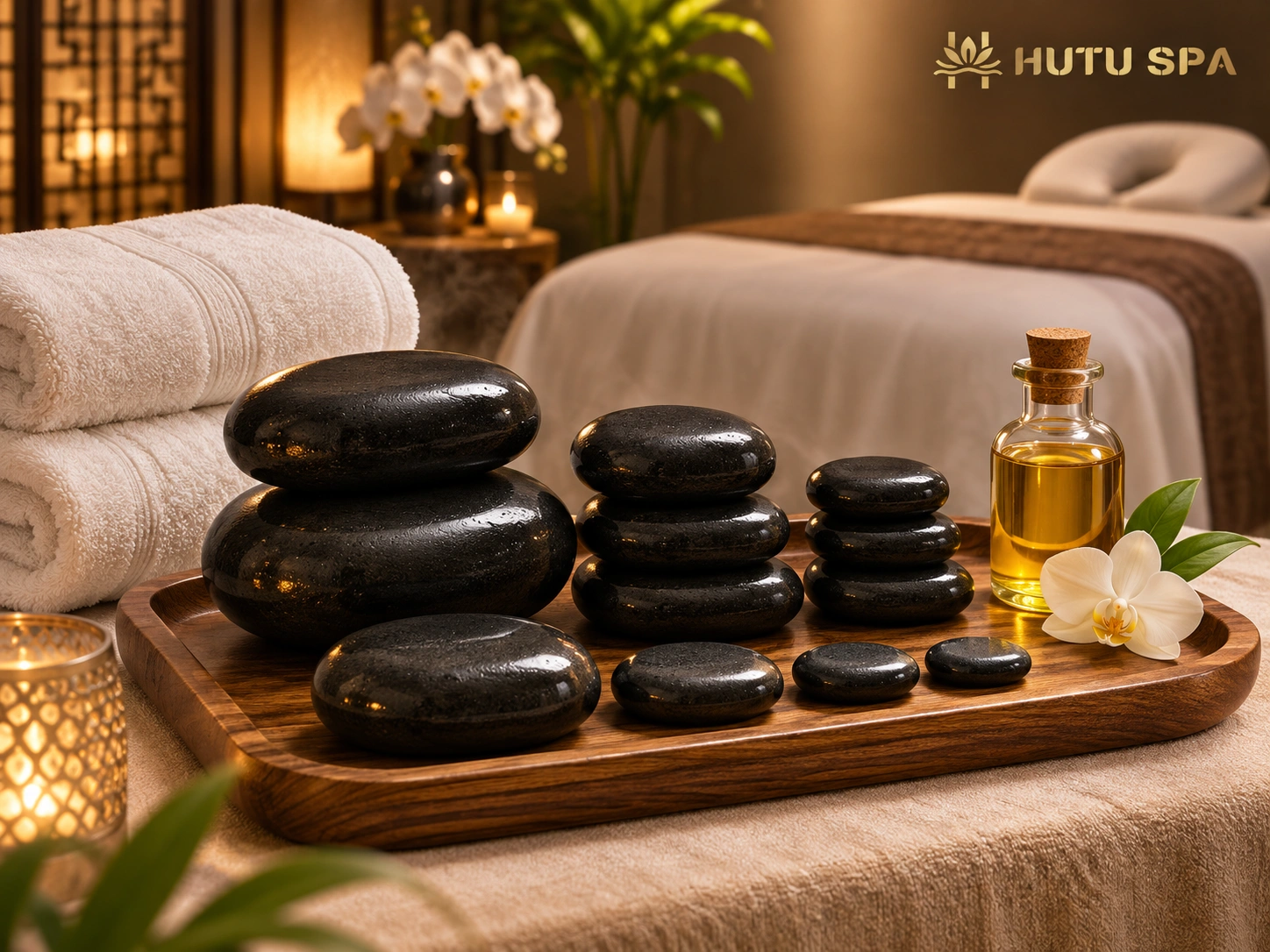
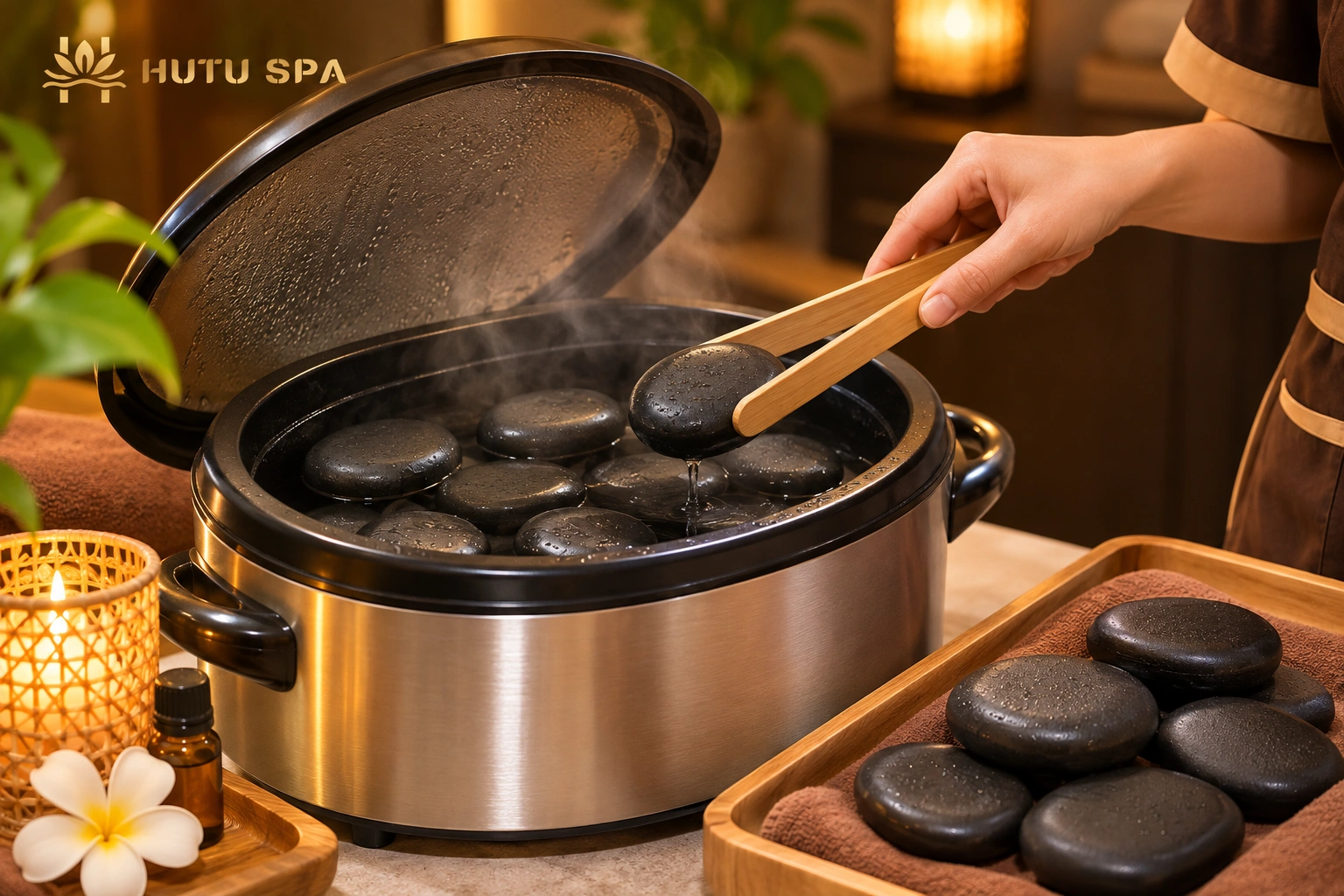
Massage stones are usually basalt, a dark volcanic rock. According to WebMD, these stones are often rich in iron, so they absorb and hold heat well. Their smooth surface lets them glide easily over the skin as the therapist strokes along the muscle fibres.
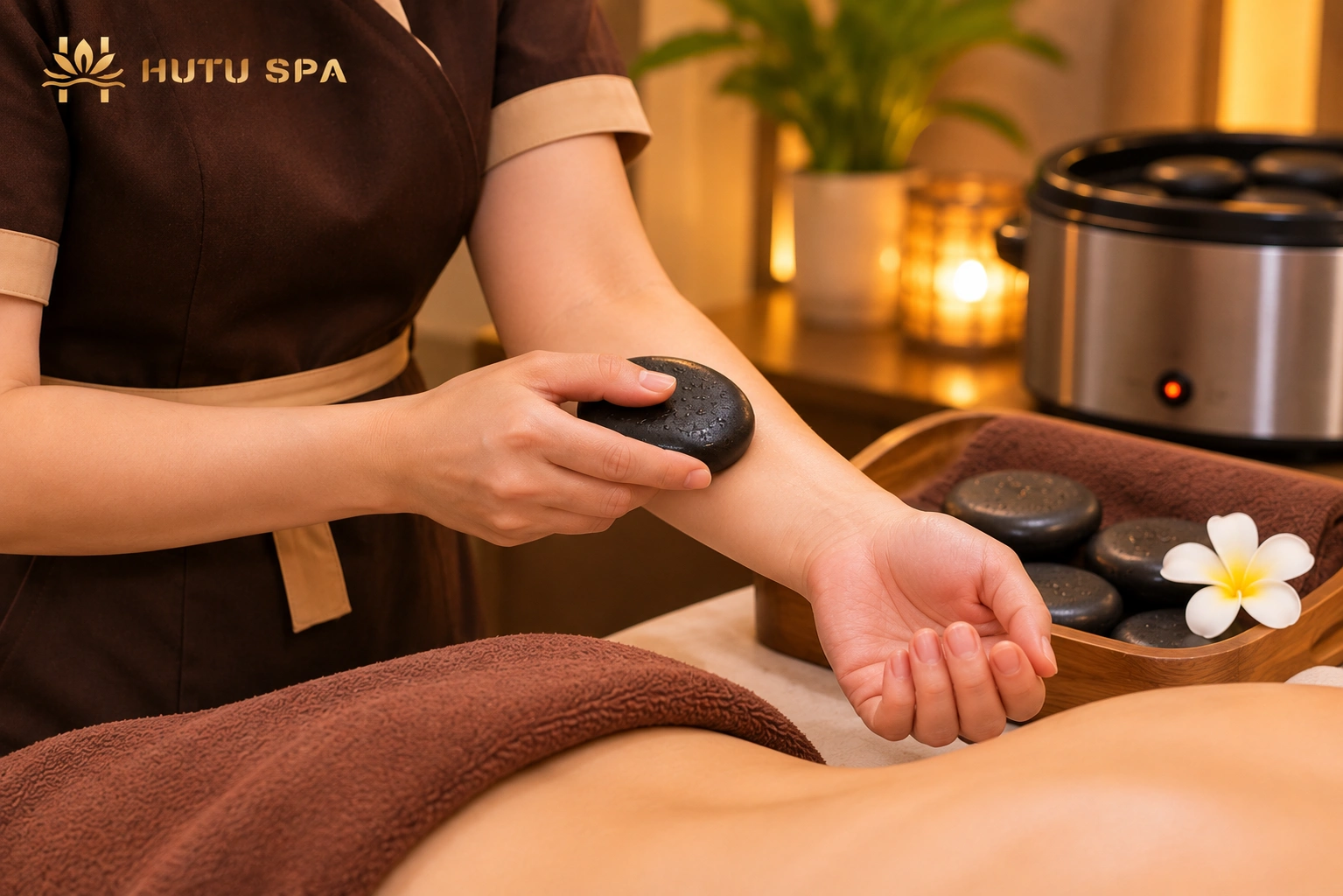
The stones are usually soaked in a dedicated heater filled with hot water. Many English-language sources give a temperature of about 130 to 145°F, which is roughly 54 to 63°C. Some Vietnamese articles mistakenly copy this as "130 to 145°C", even though water in a heater at normal pressure cannot go above 100°C. In practice, a stone touching your body should only feel pleasantly warm, and therapists usually place a towel or cloth between the stone and your skin when stones are left in one spot.
What warmth changes in the muscles and nervous system
Three main mechanisms explain most of the effects of a hot stone massage:
- Local vasodilation. Heat widens the small blood vessels under the skin, so more blood flows to the warmed area. You can see the skin turn pink and stay warm for a while after the stones are lifted.
- Soft tissue stretches more easily. Warm muscles and connective tissue become more elastic, so the therapist can work deeper without pressing hard.
- The nervous system shifts into rest mode. Even warmth, a slow massage rhythm and a quiet room help the body move from "fight" mode into the resting state controlled by the parasympathetic nervous system. Your breathing slows and your body stops bracing.
Together, these three mechanisms are what set a hot stone massage apart from a regular oil massage: muscles let go sooner, and relaxation arrives faster.
What does a hot stone massage do? 9 main benefits
The list below moves from effects you feel right away in your body to mental and recovery benefits. For each one, we note where the evidence comes from so you can judge for yourself.
1. Softens muscles and eases stiffness faster
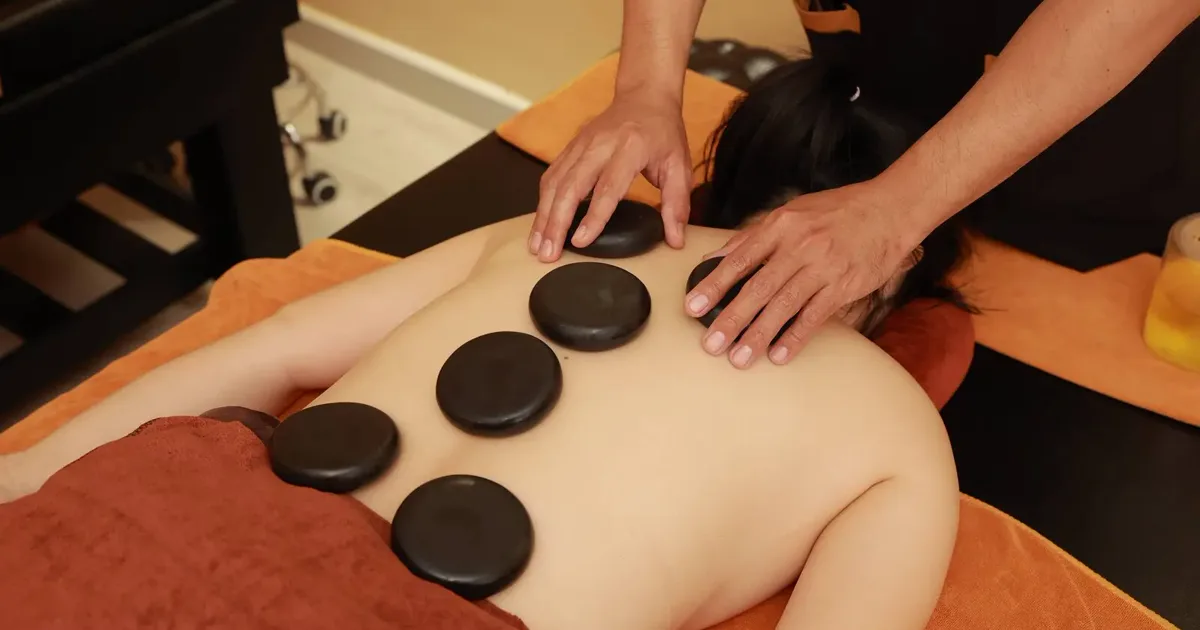
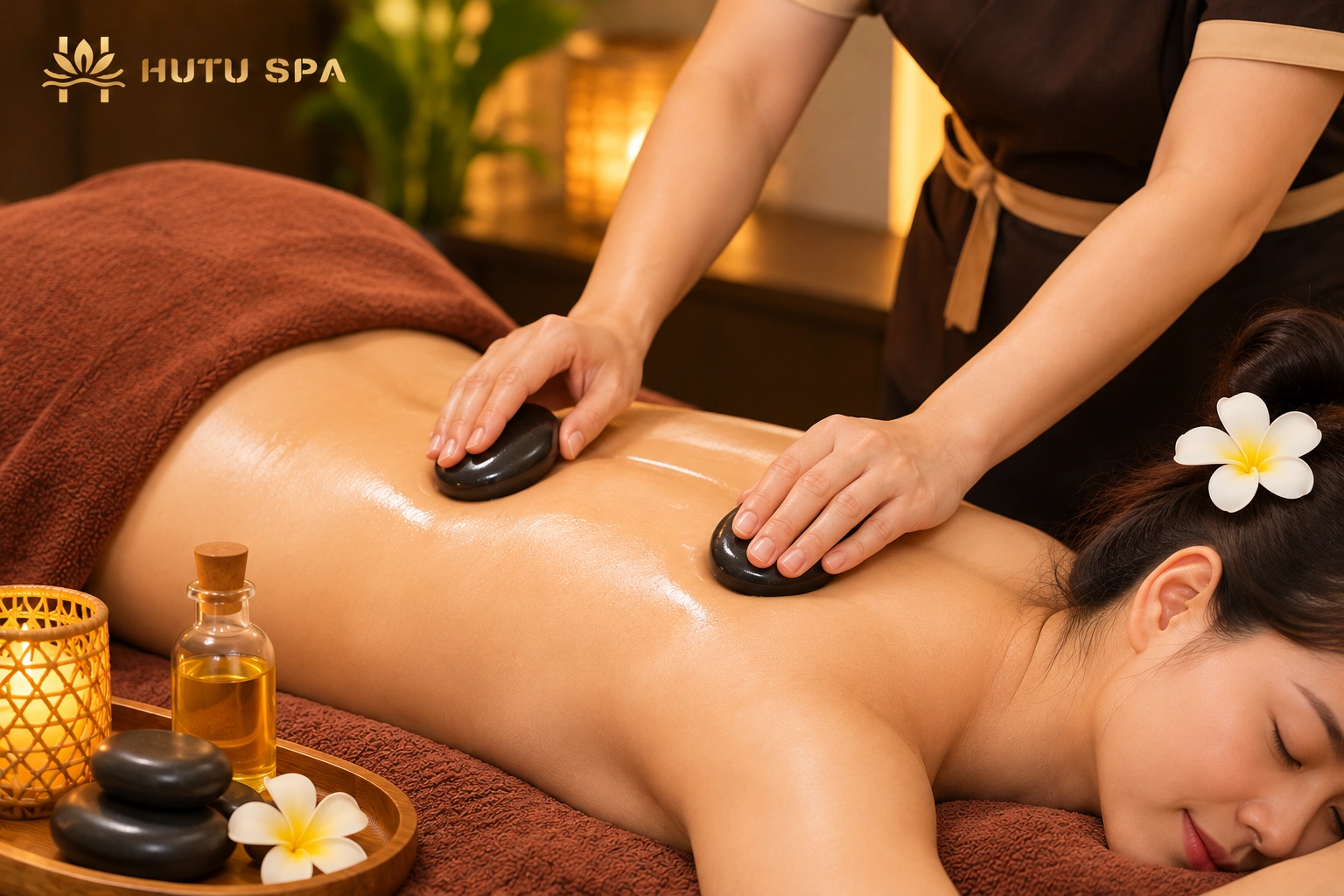
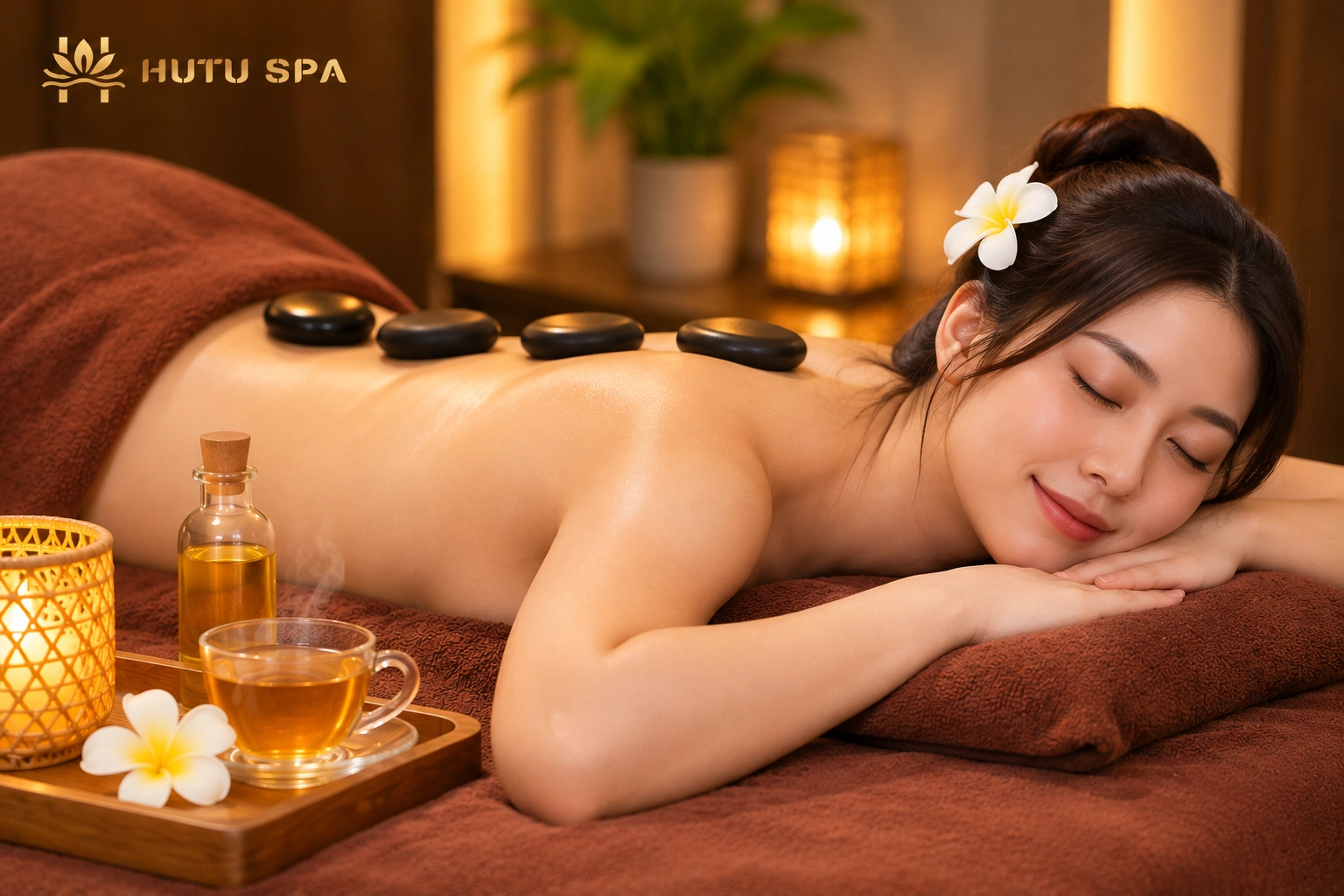
This is the easiest effect to notice. When warm stones are placed along both sides of the spine, in the palms or on the calves for a few minutes, the muscles underneath gradually soften. The therapist then uses the same stones to glide along the muscle fibres, and the combination of warmth and pressure helps tight spots release.
People who often feel a stiff back after a long day of sitting, or tight shoulders from sitting in air-conditioned rooms, usually notice the difference within the first half of the session.
2. Short-term relief of back aches
No large study has measured the effect of hot stone massage on back pain on its own. However, both components of this therapy have been studied:
- Superficial heat: a 2006 Cochrane review of 9 trials with 1,117 participants concluded there is moderate-quality evidence that heat wrap therapy reduces pain and improves function in people with low back pain lasting less than 3 months. The effect was small and short-term, and adding exercise gave better results.
- Massage: according to the US National Center for Complementary and Integrative Health (NCCIH), the 2017 guideline from the American College of Physicians (ACP) includes massage among the options for acute and subacute low back pain.
In short, a hot stone massage can help your back feel less sore for a few days, especially when the pain comes from muscle tension. It does not fix root causes such as a herniated disc or long-term poor posture.
3. Soothes the neck and shoulders of people who sit at a computer
The neck and shoulders support a head weighing several kilos through hours of looking down at a screen, so the muscles here tighten very easily. NCCIH notes that massage may offer short-term benefits for neck and shoulder pain, although the certainty of the evidence is not high. With hot stones added on the shoulders and the back of the neck, many people find this area softens faster than with hand massage alone.
A hot stone massage is only part of the solution. For longer-lasting relief, you still need to adjust your screen height, take short breaks and do a few stretches. Steps for easing neck and shoulder pain at home, such as using compresses correctly, adjusting your pillow and knowing when to see a doctor, will help the effects of your massage last longer.
4. Reduces stress and lightens your mood
Many people book a hot stone massage not because of pain but because they need to "switch off" after a stressful week. Even warmth across the back creates a feeling of being wrapped up, which makes it easier for the mind to let go.
Research on massage in general supports this. A 1997 study found that just 15 minutes of chair massage at the workplace reduced stress noticeably compared with a 15-minute break without massage. NCCIH also cites a review suggesting massage may help reduce symptoms of depression, although more research is needed. A hot stone massage lasts 60 to 120 minutes, giving the body far more time to truly relax than in those trials.
5. Helps you fall asleep more easily and sleep more deeply
This is the benefit with the clearest research on hot stones specifically. In 2019, the Journal of Research in Medical Sciences published a randomized controlled trial of 60 patients on regular haemodialysis. The intervention group received a 30-minute hot stone massage per session (10 minutes of stones resting in place, 20 minutes of back massage from the lower back up to the neck), 3 sessions a week for 4 weeks. Sleep quality on the Pittsburgh scale improved significantly compared with the group receiving usual care only.
Keep in mind this was a specific group of patients, so the results cannot simply be applied to everyone. Even so, a 2006 review of massage in general also found that back massage promotes relaxation and supports sleep in people with insomnia. Hutu Spa also sees many guests getting drowsy during a hot stone massage, especially when they book in the evening.
6. Boosts local blood flow and warms hands and feet
Heat widens the blood vessels under the skin, so the areas where stones are placed receive more blood during the massage. This explains why people who often have cold hands and feet, or who have just sat for a long time in an air-conditioned room, feel noticeably warmer after the session. This warmth usually lasts a few hours.
It is important to understand the limits: this effect is local and temporary. A hot stone massage does not "cure" circulation problems, does not replace treatment for vascular disease, and people with heart or blood vessel conditions are in fact among those who should ask a doctor first.
7. Deep relaxation without heavy pressure
Deep tissue massage helps muscles release, but many people find it painful, tense up and lose the sense of relaxation. With hot stones, the warmth does the work of "opening" the muscles, so the therapist only needs medium pressure to reach deeper layers. This is why a hot stone massage suits first-time massage guests, healthy older adults and people who are afraid of pain.
A less talked-about benefit: because the pressure is only moderate, soreness the next day is usually milder than after a deep tissue massage, which can leave you sore for 1 to 2 days.
8. May ease discomfort in some chronic pain conditions
For fibromyalgia, a condition that causes widespread pain and long-lasting fatigue, NCCIH says massage may help improve some symptoms if continued long enough. A 2002 study cited by Healthline found that patients who received 30-minute massages slept longer and had fewer tender points than a group that only practised relaxation.
Many articles attribute these studies directly to hot stone massage, but they were actually about massage in general. If you have a chronic pain condition, think of a hot stone massage as a pleasant supportive measure, and talk to your doctor before booking.
9. Restores energy after a long day on the move
For travellers, a day in Nha Trang often means hours of walking, swimming in the sea, boat trips to the islands and long rides. Your legs and back feel tired but not yet painful. This is when a hot stone massage works well: the warmth helps the muscles let go, the body relaxes, and you sleep more deeply that night so you have enough energy to continue your trip the next morning.
Just one thing to remember: if your skin is sunburnt after a day at the beach, tell the therapist so they avoid placing stones on that area, or move your booking until your skin has recovered.
How strong is the scientific evidence for each benefit
Medical News Today notes that scientific research specifically on hot stone massage is still very limited; most of the benefits are inferred from research on massage in general and heat therapy. The table below helps you tell them apart.
| Benefit | Current evidence | Level of confidence |
|---|---|---|
| Softens muscles, eases stiffness | Clear physiological mechanism of heat, consistent feedback from people who have tried it | Fairly good |
| Short-term back pain relief | 2006 Cochrane review on heat wraps; 2017 guideline on massage | Moderate, based on indirect research |
| Short-term neck and shoulder pain relief | NCCIH: massage may help, but the evidence is uncertain | Low to moderate |
| Stress reduction | Many studies on massage in general, such as the 1997 study | Moderate |
| Better sleep | 2019 randomized trial using hot stones, in dialysis patients | Moderate, narrow study group |
| Warmth, better local circulation | Heat-induced vasodilation is well understood | Fairly good, local and temporary only |
| Fibromyalgia support | NCCIH and a 2002 study on massage in general | Low |
| Immune boost | Only studies on Swedish massage, a single session, short-term effect | Very low for hot stones |
| Weight loss, detox | No evidence | None |
Reading the table is simple: the closer a benefit is to short-term relaxation and muscle relief, the more reliable it is. The more a claim sounds like curing a disease, the more cautious you should be.
What a hot stone massage cannot do
Understanding the limits helps you avoid disappointment and avoid skipping treatment you actually need.
- It does not help you lose weight or burn fat. Light sweating while lying on warm stones only loses a little water, and the weight comes back as soon as you drink.
- It does not "detox" you. Your liver and kidneys are the organs that remove toxins. The advice to drink water after a massage is to rehydrate, not to "flush out toxins".
- An immune-boosting effect has not been proven. The often-cited 2010 study looked at a single Swedish massage session without hot stones and only recorded short-term changes.
- It does not cure bone or joint disease. The 2013 study on rheumatoid arthritis examined moderate-pressure massage in general. A hot stone massage does not replace medication or physiotherapy.
- It cannot treat a fresh injury. For a sprain or muscle strain that has just happened and is still swollen and hot, heat can make the inflammation worse.
Who benefits most from a hot stone massage
You will get the most out of a hot stone massage if you belong to one of these groups:
- Office workers who often have a stiff neck and shoulders or a tired back from sitting for long periods.
- People under long-term stress who have trouble sleeping and a mind that never stops.
- People who often have cold hands and feet and spend a lot of time in air-conditioned rooms.
- First-time massage guests, or people who are afraid of strong pressure but still want their muscles to relax deeply.
- Travellers with tired legs and backs after days of getting around.
- Active people with dull, aching muscles but no acute injury.
Who should avoid a hot stone massage or ask a doctor first
A hot stone massage is generally safe for healthy people when done properly. However, medical sources such as Healthline and MSD Manuals, as well as Hutu Spa's own guidelines, all advise the following groups to avoid it or ask a doctor first:
- Pregnant women. Most therapists do not use hot stones for pregnant women. Massage should only be done with a doctor's approval and by someone trained in prenatal massage.
- People with bleeding disorders, low platelets or who take blood thinners. Massage can cause bruising and bleeding under the skin.
- People who have had a blood clot or are at risk of thrombosis.
- People with diabetes, especially with complications that reduce skin sensation. When you cannot feel heat accurately, the risk of burns goes up.
- People with heart disease or poorly controlled blood pressure.
- People who have had surgery within the last 6 weeks, or who have a fracture, severe osteoporosis or cancer that has spread to the bones.
- People with open wounds, burns, sunburn or a rash, or a sensitive skin condition such as psoriasis or eczema during a flare-up.
- People with a fresh muscle injury that is still swollen and hot. A cold compress is usually more suitable than heat at this stage. If you are unsure, our guide on choosing a hot or cold compress for muscle pain at each stage will help you decide whether to book a massage now or wait a few more days.
Also, reschedule if you have a fever, have just drunk alcohol or have just eaten a big meal. During the massage, if a stone feels too hot anywhere, tell the therapist right away. Stones left in one place for too long are also a common cause of red, stinging skin.
How the benefits of hot stone massage compare with other massages
Each type of massage is strongest at a different goal. The table below compares them by benefit so you can choose the right one for your needs.
| Type of massage | Key benefit | Pressure | Best when |
|---|---|---|---|
| Hot stone massage | Muscles relax quickly thanks to heat, deep relaxation, easier sleep | Light to medium | Stiff muscles, stress, cold hands and feet, fear of pain |
| Aroma oil massage | Mental relaxation through scent, slow rhythm | Light to medium | You want gentle relaxation or are sensitive to heat |
| Deep tissue massage | Works deep muscle layers, releases long-standing tight spots | Strong | Long-lasting aches, you are used to massage |
| Thai massage | Stretching, better flexibility, acupressure | Medium to strong | You want to stretch, your body feels stiff, you move little |
If your muscles have been tight for a long time and you can tolerate some soreness, a deep tissue massage with strong pressure may release those knots better. On the other hand, if your goal is to relax, sleep well and loosen your muscles without enduring pain, a hot stone massage is the more balanced choice. People who are sensitive to heat can choose an Aroma massage.
How often should you get a hot stone massage
There is no standard medical recommendation on how often healthy people should get a hot stone massage. You can use the goal-based guide below and adjust it to how your body feels:
| Goal | Suggested frequency | Length of each session |
|---|---|---|
| Relaxation, maintaining a sense of well-being | Once every 2 to 4 weeks | 60 to 90 minutes |
| Very tight, tired muscles from work | Once a week for 3 to 4 weeks, then less often | 90 minutes |
| Trouble sleeping, long-term stress | Once a week, preferably in the evening | 90 to 120 minutes |
| Travellers on a short holiday | Once, ideally booked in the evening | 60 to 90 minutes |
The 2019 trial used 3 sessions a week, but those were patients monitored in a medical setting. For ordinary people, more frequent massages do not bring proportionally greater benefits. If you need massages constantly just to feel less pain, that is a sign you should see a doctor to find the cause.
How to get the most out of a hot stone massage
With the same treatment, some people feel a clear effect while others only feel "nice for a while". Most of the difference lies in how you prepare and look after your body.
Before the massage
- Have a light meal about 1 hour before, and avoid arriving very hungry or right after a big meal.
- Do not drink alcohol before the massage.
- Tell the therapist clearly which areas feel tight, any health conditions you have and any medication you take, especially blood thinners.
- If you have just been to the beach and your skin feels a little sore, say so beforehand so stones are not placed on that area.
During the massage
- Speak up as soon as a stone feels too hot. Everyone tolerates heat differently, and "a bit hot but I'll put up with it" is exactly when skin gets red and sore.
- Breathe slowly and evenly, and let your body relax with the warmth instead of tensing up.
- Tell the therapist if you want more or less pressure, or want extra focus on an area such as the neck and shoulders or the calves.
After the massage
- Drink a glass of warm water to replace the fluid lost through sweat.
- Rest for about 15 to 30 minutes, and avoid a cold shower or strong sun straight away.
- If you can, go to bed earlier than usual that night to make the most of your relaxed state.
- A few gentle neck and shoulder stretches the next day help your muscles stay soft for longer.
- If pain keeps increasing, or swelling, bruising or stinging skin lasts beyond 2 to 3 days, see a doctor.
Hot stone massage at Hutu Spa Nha Trang
At Hutu Spa, hot stone massage is part of our signature treatment, the Hutu Signature hot stone massage, which combines natural oil massage with warmed volcanic stones. The therapist uses their hands to massage and the stones to keep you warm, gliding along each muscle group so your body relaxes gradually throughout the session.
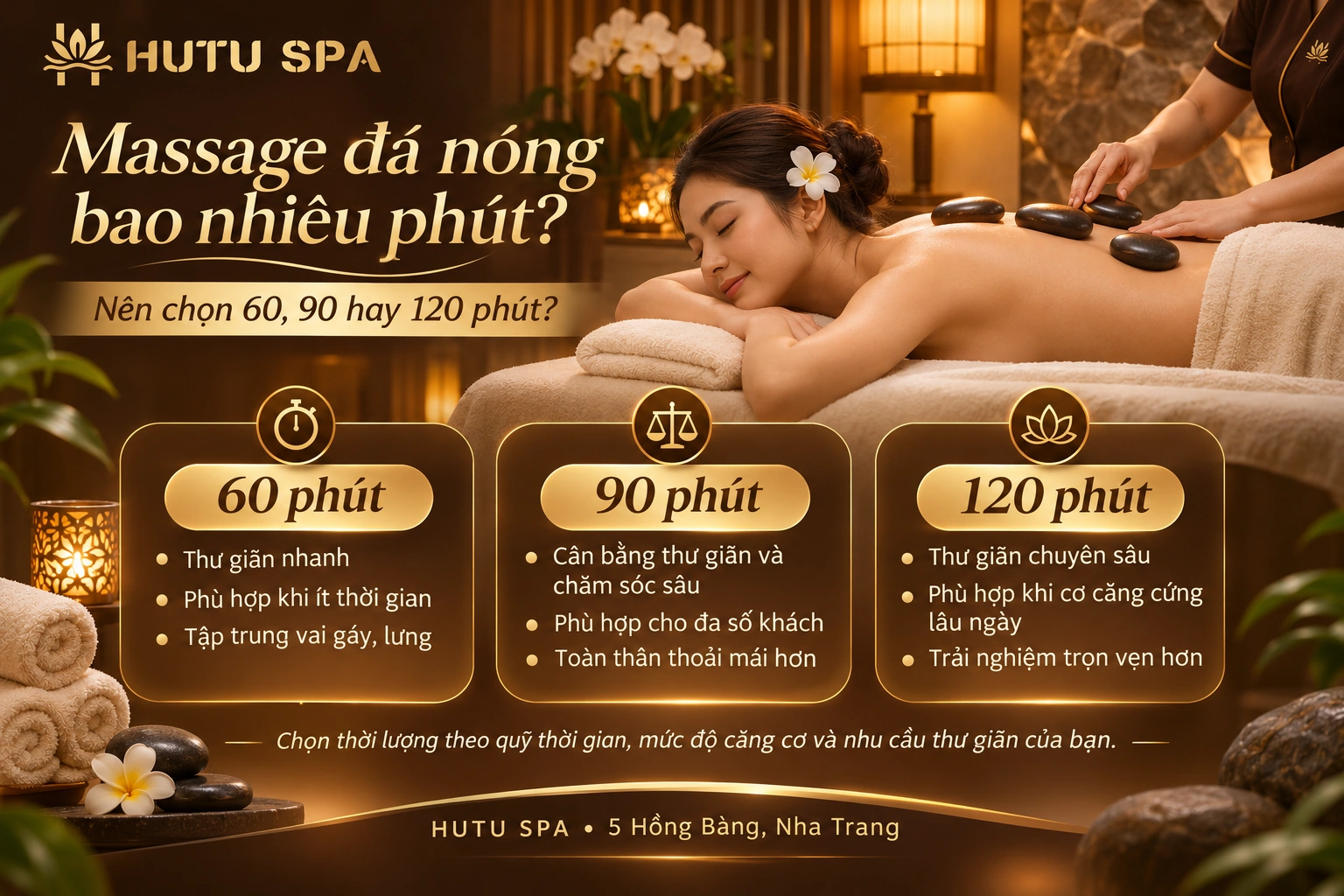
The treatment comes in 3 lengths so you can choose what suits you:
| Duration | Regular price | Monday to Friday | Saturday, Sunday |
|---|---|---|---|
| 60 minutes | 380,000 VND | 340,000 VND | 340,000 VND |
| 90 minutes | 580,000 VND | 460,000 VND | 520,000 VND |
| 120 minutes | 700,000 VND | 560,000 VND | 630,000 VND |
Prices are taken from Hutu Spa's price list updated on 02/11/2026 and may change with promotions, so please call our hotline to confirm before you come.
If this is your first hot stone massage, the 60-minute session is enough to feel the muscle-softening and relaxing effects. The 90- or 120-minute sessions suit you if you want more thorough full-body care or are very tired after many days on the move. If you are sensitive to heat, let us know in advance so the therapist can adjust, or choose an Aroma massage instead.
- Address: 5 Hong Bang, Nha Trang Ward, Khanh Hoa Province.
- Opening hours: 10:00 to 22:00 daily, last guest at 21:00.
- Hotline: 0396 161 183 (Zalo, WhatsApp, KakaoTalk available).
Frequently asked questions about the benefits of hot stone massage (FAQ)
Is a hot stone massage good for you?
Yes, for healthy people who want to relax and relieve muscle tension. A hot stone massage softens muscles quickly, reduces stress and supports sleep. However, it is a supportive therapy, not a substitute for medical treatment, and it is not suitable for some groups, such as pregnant women or people taking blood thinners, without asking a doctor first.
Does a hot stone massage help you lose weight?
No. The sweat you lose while lying on warm stones is only water, and the weight comes back as soon as you drink. A hot stone massage does not burn fat or change your body shape.
Does a hot stone massage hurt?
Usually not. A hot stone massage uses light to medium pressure, and the warmth softens the muscles so the therapist does not need to press hard. Discomfort only happens when a stone is too hot or left in one place too long, so speak up right away if you feel a burning sensation.
How soon will I feel the effects of a hot stone massage?
The muscle-softening and relaxing effects appear during the massage itself. You may notice the effect on your sleep that same night. For muscles that have been tight for a long time, you will need several sessions in a row combined with changes to your daily habits.
Can pregnant women have a hot stone massage?
Not on their own initiative. Most therapists do not use hot stones for pregnant women. If you want a massage during pregnancy, you need your doctor's approval and a therapist trained in prenatal massage.
Should I shower after a hot stone massage?
Wait about 15 to 30 minutes for your body temperature to settle before showering, preferably with warm water. Avoid cold showers or going into the sea right after the massage.
Conclusion
The benefits of a hot stone massage are clearest in what your body feels right away: muscles soften, the neck, shoulders and back feel less tight, the mind relaxes and sleep gets deeper. Research on hot stones specifically is still limited, but evidence on heat therapy and massage in general shows these short-term effects have a real basis. On the other hand, promises such as weight loss, detox or curing bone and joint disease have no evidence behind them.
To get the most benefit, choose a place where therapists ask carefully about your health, control the stone temperature carefully, and speak up whenever you feel too hot. If you are in Nha Trang and want to try it, a 60- or 90-minute session in the evening is a gentle start that lets your own body answer the question of what a hot stone massage does for you.
This article is for reference only and does not replace advice from a doctor. If you have an underlying condition, are pregnant or are undergoing treatment, please ask your doctor before having a massage.