Updated November 6, 2026. This article was prepared by the Hutu Spa Nha Trang team and cross-checked against the medical and professional massage sources listed at the end. Reading time: approximately 15 minutes.
Quick answer: Swedish massage is a gentle full-body massage that uses massage oil and five basic techniques: long gliding strokes, kneading, friction, tapping, and vibration. The pressure is generally light to moderate, with slow, steady movements, making it suitable for first-time massage clients, people experiencing stress, or anyone looking to relax. A typical session lasts 60 to 90 minutes.
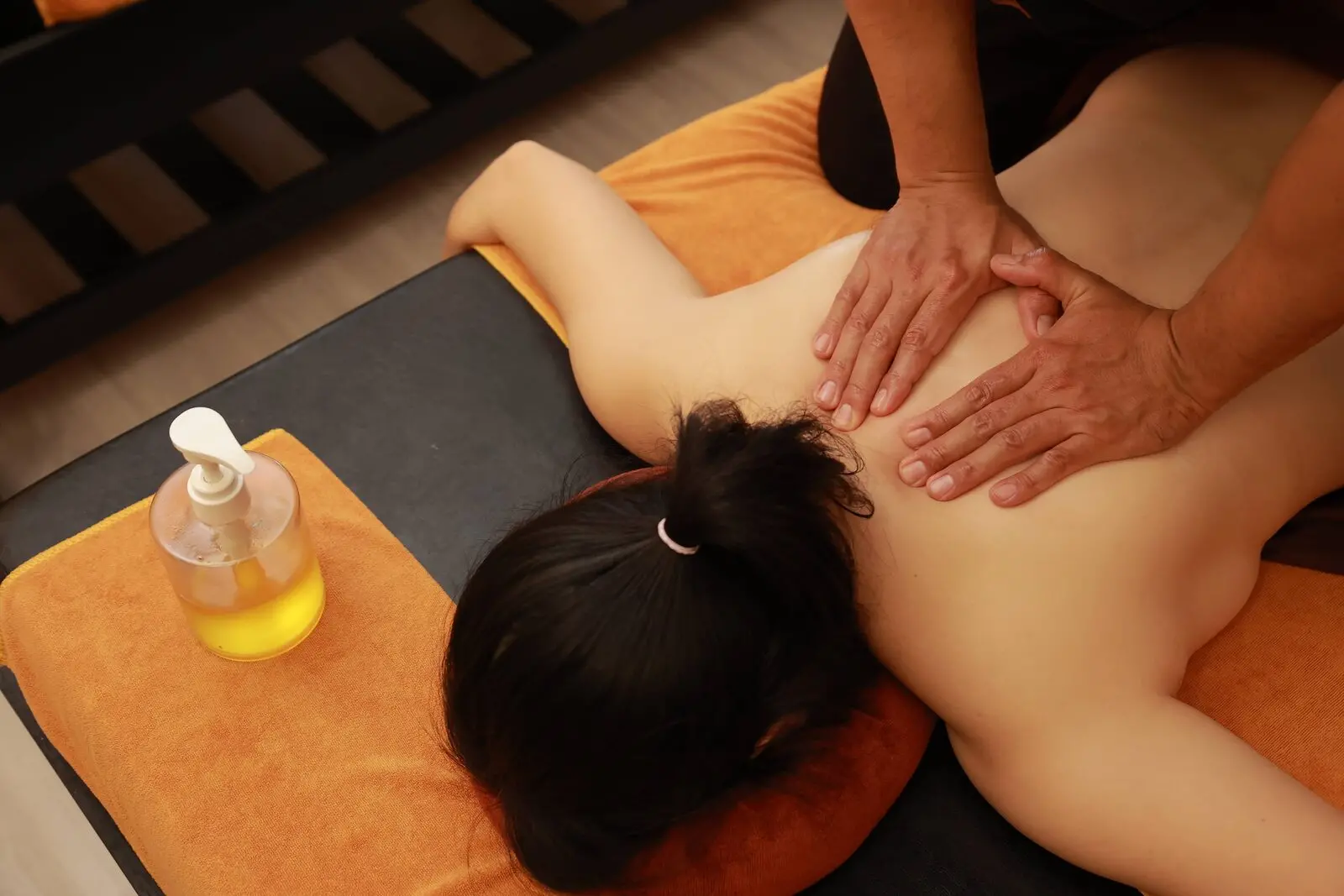 Long gliding strokes with oil are the most distinctive movements in Swedish massage.
Swedish massage at a glance
- What it is: Swedish massage is a relaxing full-body massage performed with oil, light to moderate pressure, and slow, steady movements.
- Five techniques: Effleurage (gliding), petrissage (kneading), friction, tapotement (tapping), and vibration.
- A common naming misconception: In Sweden, this massage style is generally known as classic massage. The set of techniques was systematized around 1868 by Dutch physician Johan Georg Mezger.
- Evidence-supported benefits: Relaxation, reduced muscle tension and stress, and support for joint mobility. Evidence for treating specific medical conditions remains limited.
- Safety: Generally safe when performed by a properly trained therapist, although people with underlying health conditions should consult a doctor beforehand.
- In Nha Trang: Hutu Spa does not currently list a service specifically called Swedish massage. Aroma essential oil massage is the closest option in terms of overall experience.
What is Swedish massage?
Swedish massage is one of the most popular massage styles worldwide. Australia's healthdirect describes it as a massage in which a therapist strokes, kneads, and gently taps the muscles while moving the joints. It is commonly used for relaxation, relieving muscle tension, and improving range of motion. Cleveland Clinic, an American academic medical center, describes it as a classic option for deep relaxation. It is usually a full-body massage involving gentle touch and is particularly suitable for people trying massage for the first time.
Simply put, if you lie on a massage table, covered with towels, while a therapist uses oil to glide their hands along your back, shoulders, arms, and legs in long, slow movements, you may be receiving Swedish massage or a massage style based on its techniques. Many resources consider it a foundation for other Western massage styles, including sports massage, deep tissue massage, and aromatherapy massage.
How to recognize Swedish massage
- Continuous full-body treatment: The therapist works through the back, shoulders, arms, legs, and neck, keeping areas not being treated covered with towels for comfort and privacy.
- Massage oil or cream: Helps the therapist's hands glide smoothly and reduces friction against the skin.
- Light to moderate pressure: Some movements, such as kneading or friction, may feel firmer, but the overall experience is gentler than deep tissue massage.
- Strokes toward the heart: Gliding movements on the arms and legs often travel toward the heart to encourage blood circulation.
- A structured sequence: The session usually begins gently, gradually becomes more focused in the middle, and slows down toward the end.
Are Swedish massage and classic massage the same?
Yes. The term "Swedish massage" is primarily familiar in English-speaking countries and in Vietnam. In Sweden itself, this style is commonly called classic massage. When searching for a spa, you may encounter several names, including Swedish massage, Swedish-style massage, or classic massage. Most refer to the same family of techniques.
History: Why is it called Swedish massage?
The name is one of the most commonly misunderstood aspects of this massage style. Many books and articles credit Per Henrik Ling, a Swedish physical education instructor who lived from 1776 to 1839, as the father of Swedish massage. In reality, Ling was best known for developing a system of therapeutic exercise that later became known internationally as the Swedish Movement System. Massage was only a small part of his broader system.
Many historical sources identify Dutch physician Johan Georg Mezger as the person who laid the foundation for modern Swedish massage. He organized massage techniques into a system, named the movements using French terminology, and incorporated them into clinical practice. Around 1868 is a commonly cited milestone. It is believed that he used French because it was the international language of diplomacy and academic circles at the time.
| Figure | Period | Role in Swedish massage history |
|---|---|---|
| Per Henrik Ling | 1776–1839 | Developed the Swedish therapeutic exercise system, which contributed to the Swedish association in the massage's name. |
| Johan Georg Mezger | 1838–1909 | Systematized massage techniques and introduced French names for the movements. Many sources consider him the actual founder of modern Swedish massage. |
In short, the word "Swedish" comes from Ling's legacy, while the set of movements used by therapists today is primarily associated with Mezger. This helps explain why a massage style named after Sweden uses French terminology for its techniques.
The five main Swedish massage techniques
Most training programs identify five basic groups of movements. Depending on the therapist and your preferences, each technique may be used more or less frequently and with varying pressure. Understanding these five movements helps you recognize what you are experiencing and communicate your preferences during a session.
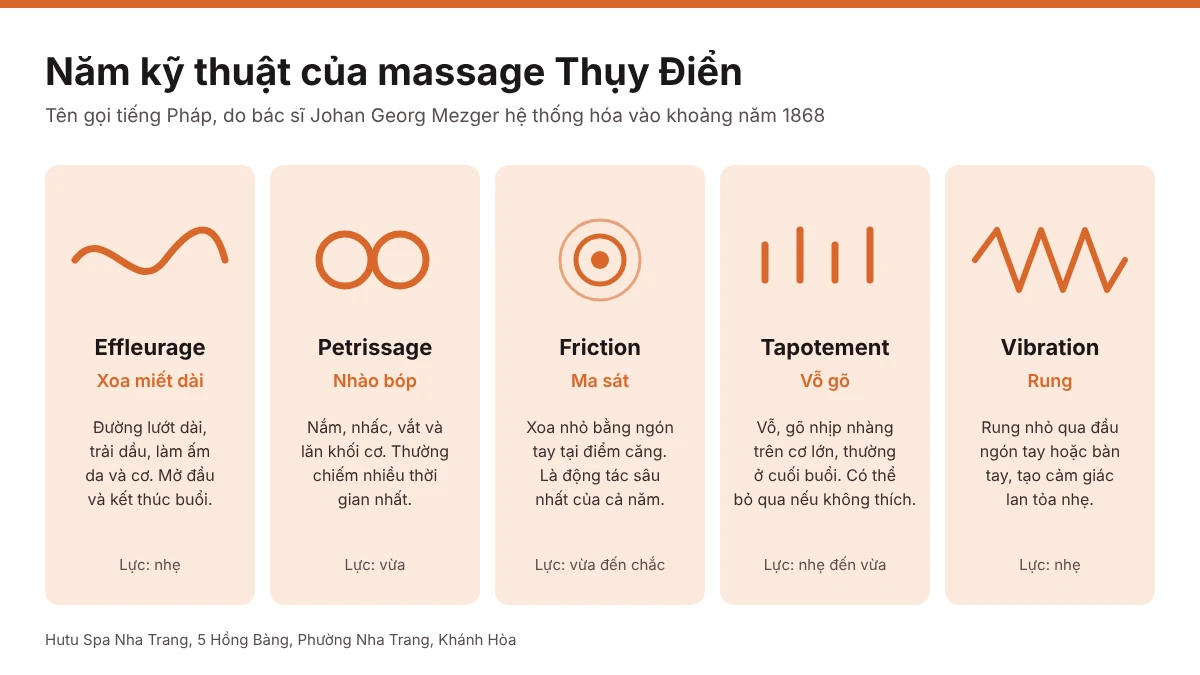
1. Effleurage: Long gliding strokes
Effleurage is a French word referring to light touching or gliding. It is commonly used at the beginning and end of a massage session. The therapist uses the palms, and sometimes the forearms, to make long, continuous strokes that follow the contours of the body. The purpose is to spread the oil evenly, warm the skin and muscles, and help you become comfortable with the therapist's touch. On the arms and legs, strokes often move toward the heart. You may feel a gentle wave of warmth traveling along your back or legs. The sensation should be pleasant and comfortable.
2. Petrissage: Kneading
Petrissage is a French term meaning to knead, similar to kneading dough. Once the muscles have warmed up through effleurage, the therapist grasps, lifts, squeezes, and rolls the muscle tissue between the thumb and fingers. According to many massage training resources, this technique often takes up a significant portion of a Swedish massage session. It is commonly applied to the shoulders, upper back, thighs, and calves. The sensation is firmer than effleurage and may feel satisfying, but it should not cause sharp pain.
3. Friction
Friction involves small, focused movements. The therapist uses the fingertips, thumbs, or heels of the hands to make circular or cross-fiber movements over a specific tense area. Among the five Swedish massage techniques, friction is generally one of the most focused and deeper movements. It is usually applied briefly to areas such as the shoulder blades, neck, or lower back. If the pressure feels too strong, tell the therapist immediately so they can adjust it.
4. Tapotement: Rhythmic tapping
Tapotement is a group of rhythmic movements that may include gentle patting, tapping, cupping the hands, or using the edges of the hands to make quick movements over larger muscle groups such as the back and thighs. This technique often appears toward the end of a session and may last a few minutes. Many people find it refreshing and invigorating, while others may find it too intense. If you do not enjoy it, simply ask the therapist to skip it. Your massage can still be complete without this technique.
5. Vibration
Vibration involves small, rapid movements transmitted through the fingertips or hands to a specific area of the body. It is the fifth technique in the system and is generally used less frequently than the other four or incorporated into other movements to create a gentle, spreading sensation. You may not always recognize when vibration is being used, and that is perfectly normal.
What happens during a Swedish massage session?
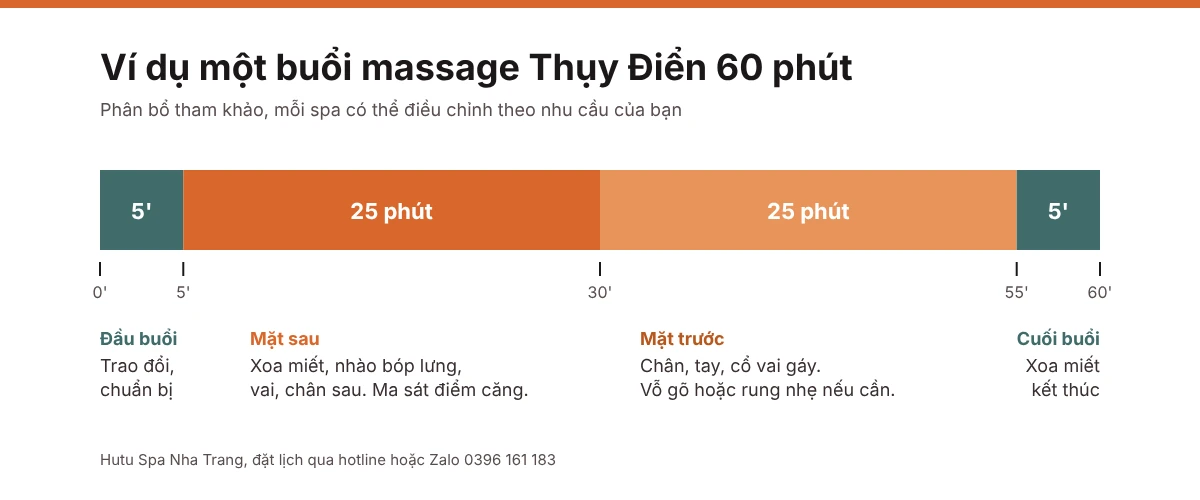
If you have never experienced Swedish massage before, here is a typical session sequence. The exact order may vary slightly depending on the spa and your individual needs.
- Brief consultation. The therapist asks about your health, lifestyle, areas of discomfort, allergies to massage oils, and preferred pressure. This is the time to mention pregnancy, injuries, or medications you are taking.
- Preparation. You lie on the massage table, usually starting face down. Areas not being treated remain covered with towels or sheets. You can keep your clothes on if you prefer.
- Warm-up with effleurage. Long gliding strokes across the back, shoulders, arms, and legs help warm the muscles and distribute the oil.
- Kneading. This is the main part of the session, focusing on the shoulders, back, thighs, and calves.
- Focused friction. The therapist briefly works on specific tense areas that you have identified.
- Tapping or gentle vibration. These movements are used only when appropriate, usually at the end of each body area or toward the end of the session.
- Position change and finishing movements. You turn onto your back so the therapist can work on the front of your legs, arms, neck, and shoulders. The session ends with slow gliding strokes to help your body relax.
Throughout the session, you always have the right to speak up. If the pressure is too strong, the oil has an unpleasant scent, the room feels too cold, or your skin feels irritated or itchy, let the therapist know immediately. A good therapist adjusts the pressure based on your feedback rather than following a rigid routine.
What are the benefits of Swedish massage?
The honest answer is that several benefits have been reported, but the strength of scientific evidence varies depending on the specific benefit. The US National Center for Complementary and Integrative Health (NCCIH) states that massage appears to have a relatively low risk when performed by a trained professional. Previous materials from the same organization also emphasize that scientific evidence for massage remains limited and that firm conclusions cannot be drawn for every medical condition. Therefore, Swedish massage should be viewed as a way to support relaxation and general well-being, not as a medical treatment.
Relaxation and stress relief
This is one of the most noticeable and frequently reported benefits. Cleveland Clinic explains that massage may increase parasympathetic nervous system activity, the part responsible for the body's rest-and-relax response, which may help reduce feelings of anxiety. A massage specialist quoted by Cleveland Clinic also notes that Swedish massage can promote a relaxed emotional state, which in turn affects muscle tension. Healthdirect also lists stress among the conditions that Swedish massage may help relieve.
Reducing muscle tension and soreness
For muscle tension and soreness, healthdirect reports that Swedish massage may help reduce pain, muscle tightness, and joint discomfort. Cleveland Clinic summarizes research involving acute lower back pain, neck pain, headaches, and knee pain, while noting that the benefits tend to be more short-term than long-lasting. Some studies have found better results with repeated 60-minute sessions several times per week compared with fewer or shorter sessions.
This has an important practical implication: a single massage session is unlikely to compensate for poor daily habits. If your neck and shoulder discomfort comes from sitting at a computer for long periods or frequently looking down at your phone, combine massage with at-home ways to relieve neck and shoulder pain, such as applying warm compresses, gentle stretching, and improving your working posture, to support longer-lasting results.
Supporting sleep and mood
Cleveland Clinic explains that massage may reduce cortisol, a hormone associated with stress, while increasing serotonin and dopamine, neurotransmitters that help regulate mood. Some studies suggest that massage may be beneficial for insomnia in menopausal women and people with heart failure. For otherwise healthy individuals, the practical effect may simply be feeling more relaxed and finding it easier to fall asleep that evening. This does not mean everyone will experience long-term improvements in sleep.
Circulation and joint mobility
Healthdirect explains that Swedish massage movements are designed to encourage blood flow toward the heart and support circulation. They may also help improve joint range of motion. This is one reason why gliding strokes on the arms and legs often move in the direction of the heart.
What this article does not claim
Online, you may come across promises that massage can "detoxify the body," "burn fat," or "cure" certain diseases. The medical sources referenced in this article do not provide conclusive evidence for these claims. NCCIH also advises against using massage as a replacement for conventional medical care. If you experience persistent or severe pain or unusual symptoms, seek medical advice before considering massage.
How is Swedish massage different from Thai, therapeutic, deep tissue, and aromatherapy massage?
These are some of the most common questions people encounter when browsing spa service menus because the names can sound similar. The following table helps you compare them based on their main purpose, pressure, and typical experience.
| Massage type | Main purpose | Pressure | Typical experience |
|---|---|---|---|
| Swedish massage | Full-body relaxation and stress relief | Light to moderate | Gentle, slow, long gliding strokes |
| Aroma essential oil massage | Relaxation through fragrance and gentle movements | Light to moderate | Gentle, aromatic, and rhythmic |
| Traditional Thai massage | Body acupressure and passive stretching | Moderate to firm | Similar to assisted yoga |
| Therapeutic massage | Targeting specific areas of muscle tension and discomfort | Deeper | Firm pressure focused on specific areas |
| Deep tissue massage | Working on deeper muscles and connective tissue | Firm to strong | Noticeable pressure, with possible mild soreness afterward |
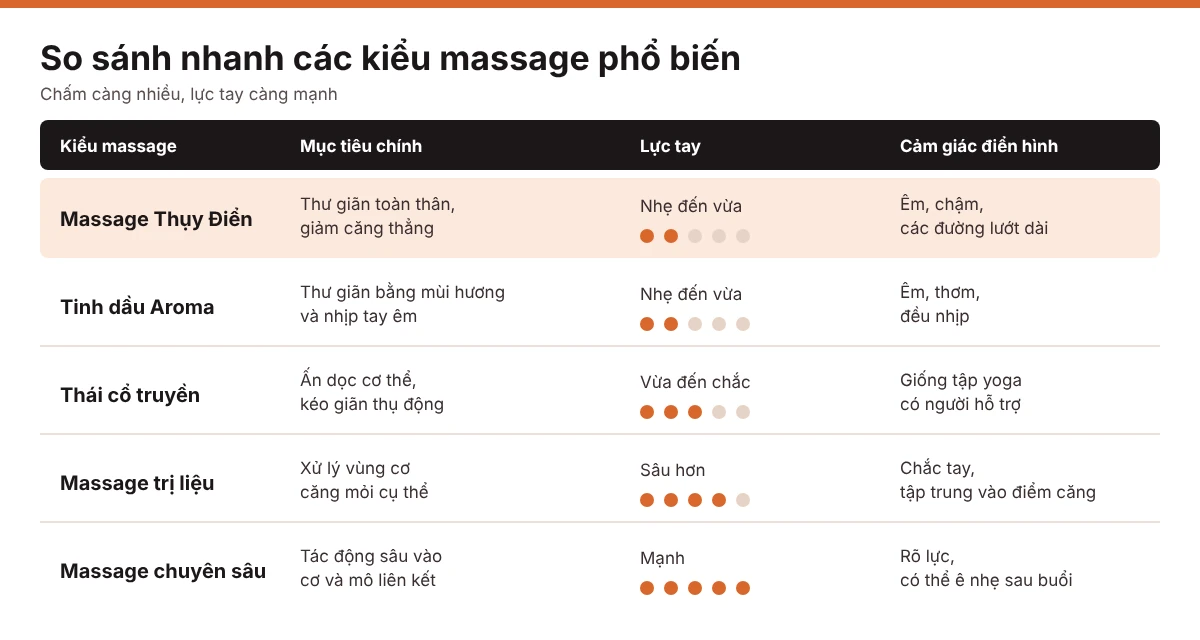
With Thai massage, the biggest difference is the treatment method. Traditional Thai massage combines pressure along the body with passive stretching similar to yoga. You usually wear loose, comfortable clothing rather than lying under towels as you would during Swedish massage. If you prefer stretching and joint movement over gentle gliding strokes, Thai massage may be a better fit.
Deep tissue massage works more deeply into muscles and connective tissue to address areas of tension. It may be suitable for people with persistent muscle tightness or those accustomed to firmer pressure. Cleveland Clinic notes that different massage styles are not mutually exclusive because therapists often combine several techniques in one session. Therefore, do not focus too rigidly on the service name. What matters most is being able to explain whether you prefer light or firm pressure and general relaxation or focused work on a specific area.
Who should try Swedish massage, and who should consult a doctor first?
People who may benefit from Swedish massage
- First-time massage clients: Light to moderate pressure and a structured routine can make the experience less intimidating.
- People experiencing stress or sensitivity to strong pressure: Many general medical resources describe this style as a gentle option for people in this group.
- Office workers: The shoulders, neck, and upper back often become tense after prolonged sitting, making gentle gliding and kneading movements appealing.
- Travelers looking to relax after a day at the beach or a long journey.
When should you consult a doctor first?
Healthdirect recommends speaking with a doctor before receiving a massage if you are experiencing pain or have an underlying medical condition. Massage may not be appropriate if you have:
- Heart failure or kidney failure;
- Blood clots;
- Burns or bruises;
- Potentially contagious skin conditions, such as warts or cold sores;
- Osteoporosis or osteoarthritis;
- Nerve damage.
In addition, pregnant women, people undergoing cancer treatment, those who have recently had surgery, and individuals taking prescription medication should consult a doctor and clearly inform the spa about their circumstances. If you have severe pain, swelling, warmth, numbness, or muscle weakness, seek medical evaluation before considering massage.
If your goal is to address a specific area of muscle tension rather than simply relax, therapeutic massage, which generally uses deeper pressure, may be more appropriate. However, certain people should avoid specific techniques, so consider your health circumstances before booking.
Another important point from healthdirect: although the risk of massage making pain worse is relatively low, it is higher when treatment is performed by someone without proper training. Common side effects, when they occur, include mild bruising, soreness, and fatigue.
Choosing pressure and session duration for Swedish massage
How to choose the right pressure
You can think of massage pressure in three levels: light, moderate, and firm. Swedish massage generally falls within the light-to-moderate range. One simple approach is to rate your preferred pressure on a scale of 1 to 10 at the beginning of the session. For example, you could say, "I'd prefer a pressure level of around 4 to 5." You can then adjust it as the session progresses. A good indication that the pressure is appropriate is being able to breathe deeply and relax without grimacing or holding your breath.
Should you choose 60, 90, or 120 minutes?
- 60 minutes: Usually enough for a comfortable full-body session. Suitable for beginners or people with busy schedules.
- 90 minutes: Allows more time for the shoulders, back, and legs without rushing. A good option if you feel particularly tired or spend long hours sitting.
- 120 minutes: Best for days when you have plenty of free time and want a more extended relaxation experience.
If you only want to address neck and shoulder tension after a day at work, a focused 30-minute session may be more suitable than a full-body treatment. There is no universal massage frequency that works for everyone. If your goal is relaxation, choose a schedule based on your needs and budget. If you are trying to manage persistent pain, consult a doctor or physical therapist.
Preparing for and caring for yourself after a massage
Before your massage
- Avoid arriving either too full or too hungry, as lying face down for an extended period may feel uncomfortable.
- Arrive 5 to 10 minutes early to allow time for consultation. At Hutu Spa, arriving late may result in a shorter treatment session.
- Inform the therapist in advance about allergies, pregnancy, injuries, and medications you are taking.
- Tell the therapist which oil scents you prefer or want to avoid if you are sensitive to fragrances.
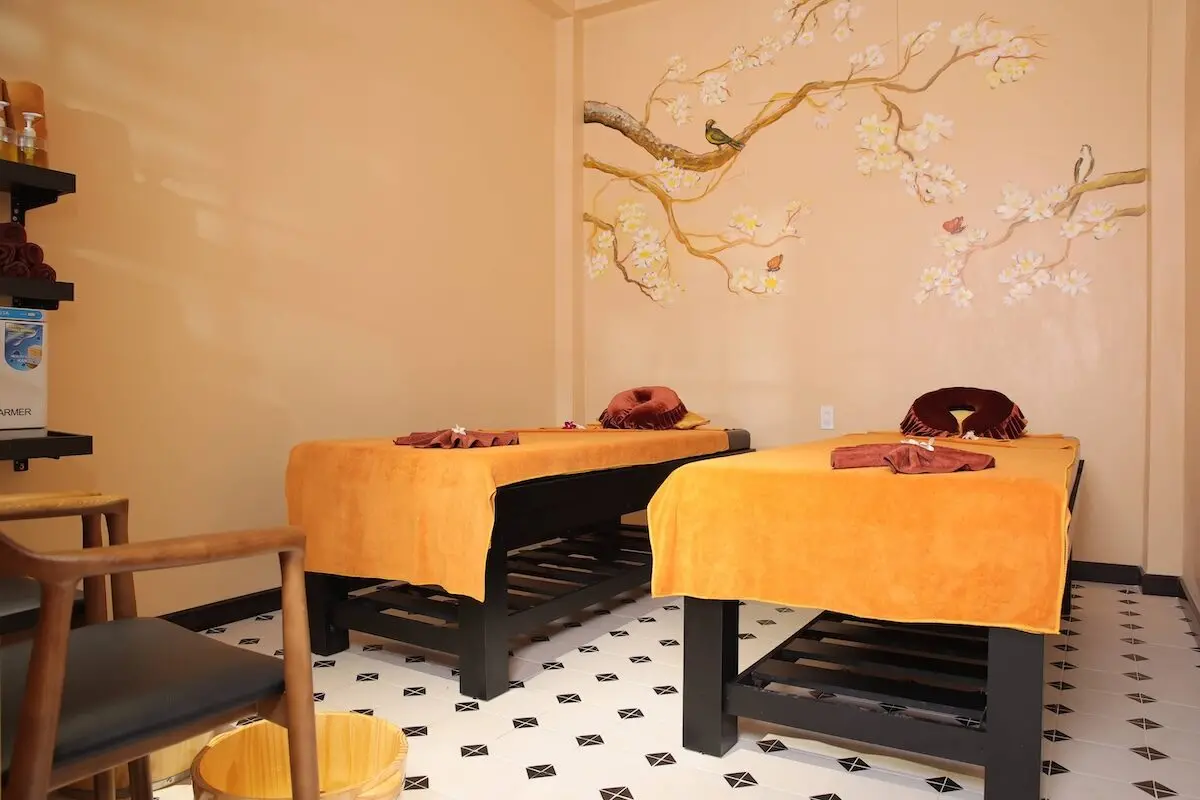 A private and comfortable environment can help you relax more easily during a massage.
After your massage
- Sit up slowly and drink a glass of water, especially if your hands or feet still feel oily.
- Allow for some tiredness or mild soreness. Cleveland Clinic notes that you may experience soreness after a massage. Managing it is similar to dealing with muscle soreness after exercise.
- A common question is whether you should shower after a massage. The practical answer depends on the type of oil used, the water temperature, and your comfort. If your skin still feels oily, you can wipe it with a towel or take a warm shower when you get home. There is no universal rule requiring you to keep massage oil on your skin for a specific period. Read more about whether you should shower after a massage.
- Be mindful of sun exposure. Some oils and essential oils may make your skin more sensitive to sunlight. If you are visiting Nha Trang, consider going to the beach in the morning and scheduling your massage for late afternoon or evening.
- Monitor your skin and body for 1 to 2 days. If you experience significant bruising, worsening pain, numbness, or a rash, contact the spa and seek medical attention when necessary.
Swedish massage in Nha Trang: Which service should you choose at Hutu Spa?
To avoid any confusion, Hutu Spa's current website service menu does not include a separate service specifically called Swedish massage. If you are looking for a similar experience, with long gliding strokes, light to moderate pressure, slow movements, and massage oil, the two closest options are Aroma essential oil massage and Hutu Signature. Both share the same general relaxation philosophy, but they do not follow exactly the same training program as Swedish massage.
- Aroma essential oil massage: Uses massage oil blended with aromatic essential oils, combined with long gliding strokes and slow movements. Hutu Spa describes its pressure as light to moderate, making it the closest option to the overall feel of Swedish massage. For more information about choosing scents and checking for sensitivity to essential oils, read Hutu Spa's guide to Aroma essential oil massage.
- Hutu Signature: Combines natural essential oils with the warmth of volcanic stones, making it suitable for people who enjoy a deeper warming sensation.
When booking, you can leave a note saying: "Light to moderate pressure, long gliding strokes, slow movements, and a mild fragrance." This helps the therapist understand your preferences, even if the menu does not list Swedish massage by name.
Reference prices for the two closest services
The following prices are based on Hutu Spa's published price list as of November 6, 2026. All prices are in VND. Promotions may change, so please check with the spa before booking.
| Service | Duration | Regular price | Monday to Friday | Saturday and Sunday |
|---|---|---|---|---|
| Aroma essential oil massage | 60 minutes | 340,000 VND | 310,000 VND | 310,000 VND |
| Aroma essential oil massage | 90 minutes | 530,000 VND | 440,000 VND | 480,000 VND |
| Aroma essential oil massage | 120 minutes | 620,000 VND | 500,000 VND | 560,000 VND |
| Hutu Signature | 60 minutes | 380,000 VND | 340,000 VND | 340,000 VND |
| Hutu Signature | 90 minutes | 580,000 VND | 460,000 VND | 520,000 VND |
| Hutu Signature | 120 minutes | 700,000 VND | 560,000 VND | 630,000 VND |
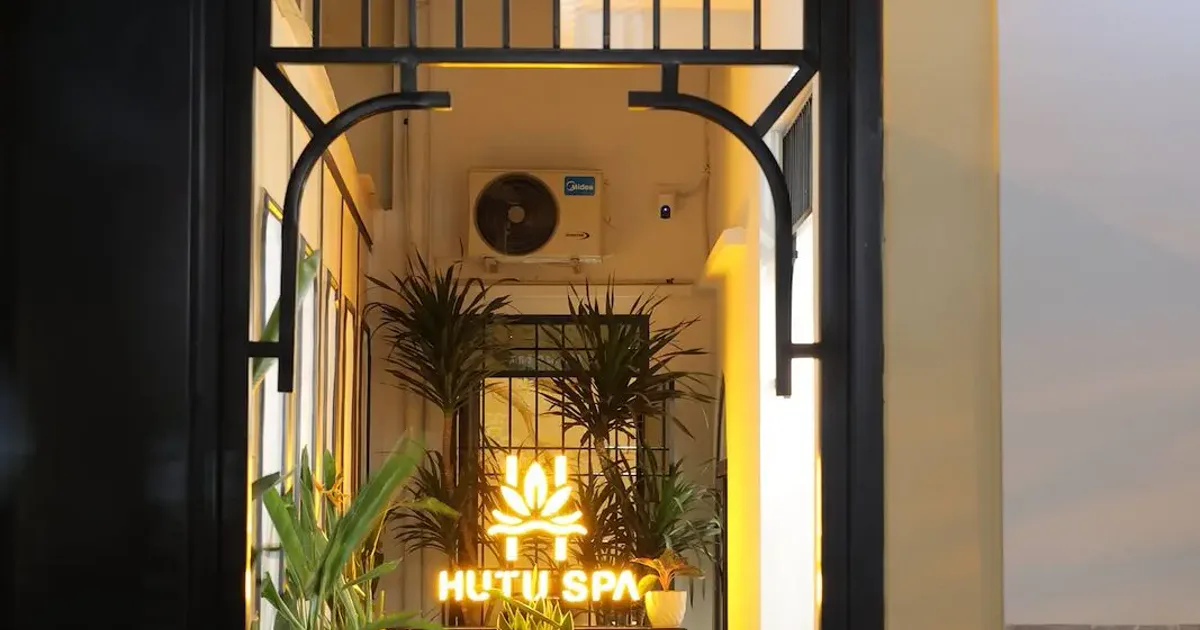 Hutu Spa is located at 5 Hong Bang Street in central Nha Trang.
Booking information
- Address: 5 Hong Bang Street, Nha Trang Ward, Khanh Hoa Province, in the city center.
- Opening hours: Daily from 10:00 AM to 10:00 PM. The latest booking time is 9:00 PM.
- Reservations: Call 0396 161 183, message via Zalo or Viber using the same number, contact WhatsApp at +84 396 161 183, use KakaoTalk, or book online through the website.
- International guests: The spa supports Zalo, KakaoTalk, and WhatsApp for guests from South Korea, Russia, and other countries.
- Complimentary extras: A welcome drink and complimentary dessert, according to the spa's published information.
Frequently asked questions about Swedish massage
Is Swedish massage actually a massage developed by Swedish people?
Not exactly. The word "Swedish" comes from Per Henrik Ling and his Swedish therapeutic exercise system. The massage movements with French names used by therapists today were systematized by Dutch physician Johan Georg Mezger. In Sweden, this style is generally known as classic massage.
Is Swedish massage painful?
Usually not. The pressure is generally light to moderate. You may experience firmer, satisfying pressure during kneading or friction on tense areas, but the treatment should not cause sharp pain. If you feel pain, tell the therapist immediately so they can reduce the pressure.
Do you have to remove all your clothes for Swedish massage?
No. Healthdirect explains that areas of the body not being treated can remain covered with towels or sheets. You can keep your clothes or underwear on if that makes you more comfortable. Simply discuss your preference with the therapist beforehand.
Can Swedish massage relieve back pain and neck and shoulder tension?
It may help relieve mild to moderate pain and muscle tension, according to healthdirect and Cleveland Clinic, although the benefits are generally short-term. If you have persistent or severe pain or experience numbness, seek medical advice first.
How often should you get a Swedish massage?
There is no universal frequency that works for everyone. If you get massages for relaxation, you can choose a schedule based on your needs and budget, such as once every few weeks. If you are using massage to support the management of chronic pain, ask a doctor or physical therapist about an appropriate schedule.
Can pregnant women receive Swedish massage?
Consult your pregnancy care provider first. Cleveland Clinic discusses pregnancy-specific massage as an option that may help relieve pain and swelling. However, your doctor may recommend avoiding certain techniques or essential oils. Always inform the spa that you are pregnant when making an appointment.
What is the difference between Swedish massage and Thai massage?
Swedish massage uses oil and light to moderate pressure. You lie under towels while the therapist performs gliding, kneading, and tapping movements. Thai massage combines pressure along the body with passive stretching similar to yoga. Clients generally wear loose clothing, and less oil is used.
Does Hutu Spa offer Swedish massage?
Hutu Spa's website does not currently list a service specifically called Swedish massage. The closest option in terms of overall experience is Aroma essential oil massage, available in 60-, 90-, and 120-minute sessions. You can request light to moderate pressure, long gliding strokes, and slow movements when booking.
Conclusion
What is Swedish massage? It is a gentle full-body massage using five main techniques: gliding, kneading, friction, tapping, and vibration. The treatment uses oil and slow, steady movements. Its most recognized benefits are relaxation and reduced muscle tension. It is not a substitute for medical treatment, and people with underlying health conditions should consult a doctor before receiving a massage.
If you are in Nha Trang and would like a gentle, slow-paced oil massage, call Hutu Spa at 0396 161 183 or send a message via Zalo. The team can help you reserve a session and recommend the service that best matches your preferences.