Hutu Spa Editorial Team. Updated November 16, 2026.
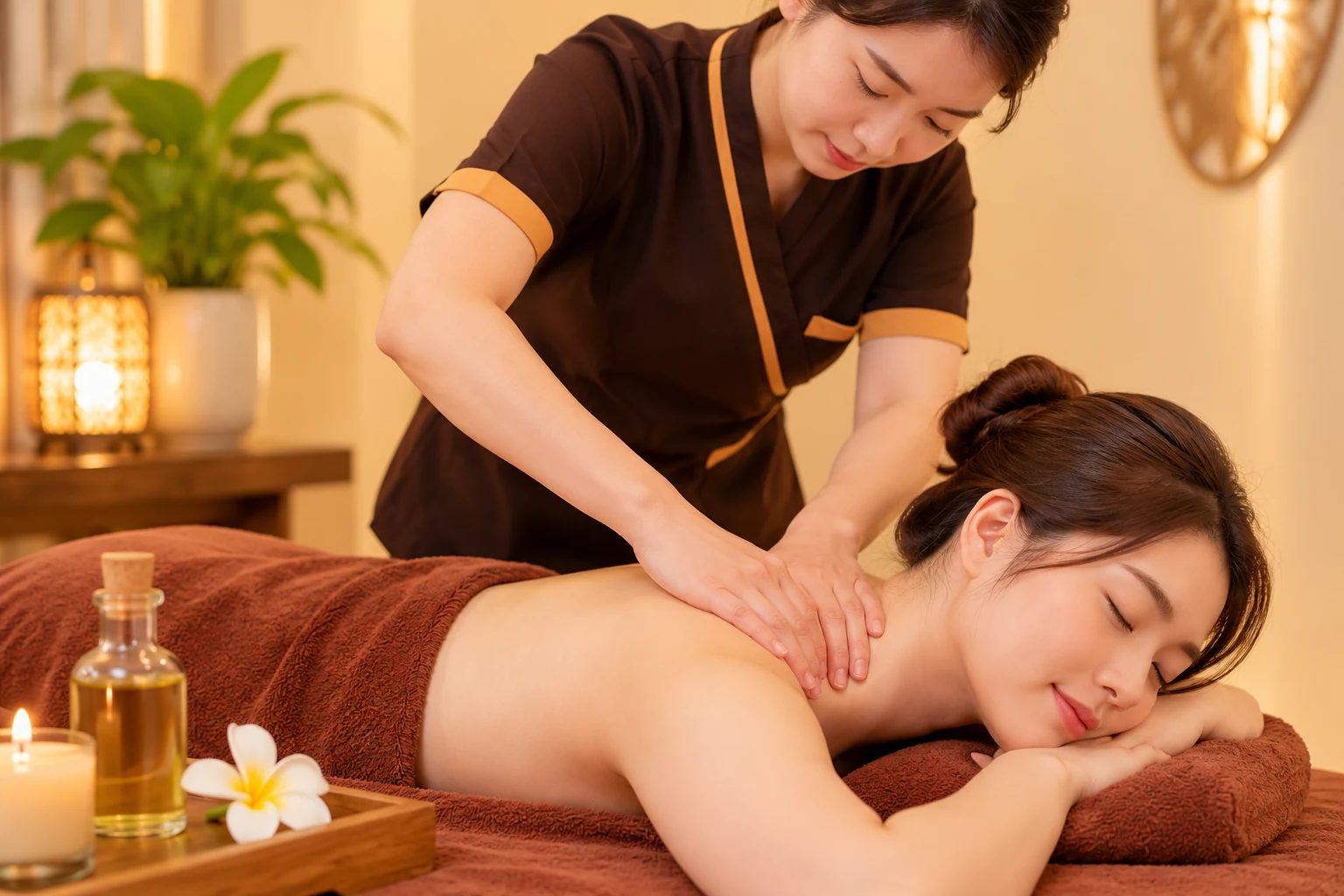
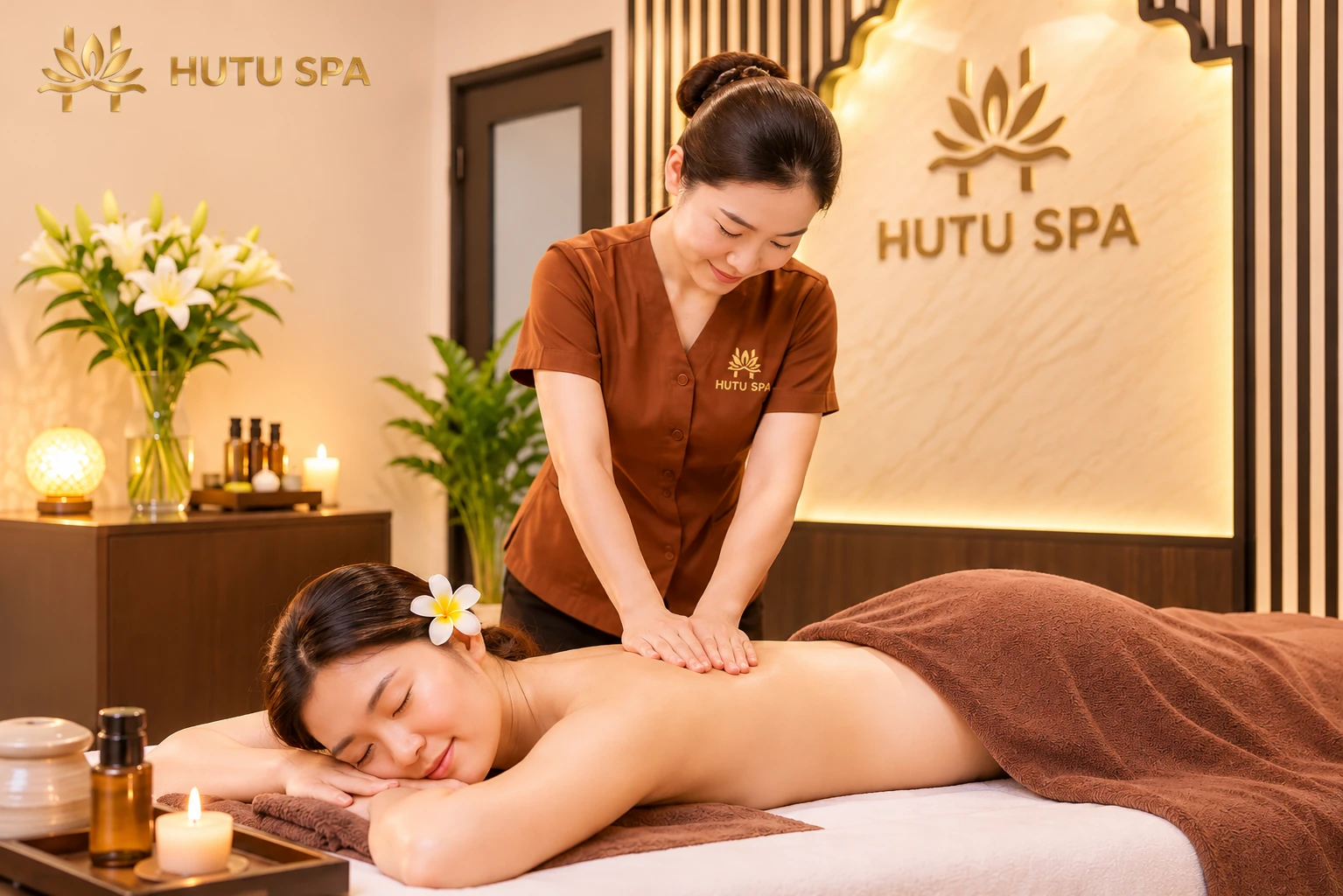
Massage is a technique that uses the hands, sometimes assisted by the forearms, elbows, or tools, to rub, press, knead, and stroke the body's soft tissues, including the skin, muscles, tendons, ligaments, and fascia. Its primary purposes are to help the body relax, relieve muscle tension, and ease aches and soreness. Massage is also commonly referred to as bodywork or manual therapy in certain contexts.
It may sound straightforward, but when browsing a spa menu, many people still feel confused: How is Swedish massage different from Thai massage? Is therapeutic massage painful? Are there people who should avoid massage altogether? This article explains everything from the basics, including the origin of the word massage, five fundamental techniques, popular massage types, research-supported benefits, safety precautions, and what to expect during a spa massage session.
Quick overview of massage
If you only have a minute, here are the most important things to know before booking a massage.
- Definition: Massage involves applying manual pressure and movements to soft tissues to promote relaxation and relieve muscle tension. Bodywork and manual massage are other ways of describing this practice.
- Fundamental techniques: Effleurage, petrissage, friction, tapotement, and vibration. These are the five basic techniques of classical Western massage.
- Two main purposes: Full-body relaxation using light to moderate pressure, or targeted therapeutic massage focusing on tense and sore muscles with deeper pressure.
- Best-supported benefits: Reducing stress, promoting relaxation, and providing short-term relief from muscle aches and soreness. Many other potential benefits still require further research.
- Not suitable for everyone: People with blood clots, bleeding disorders, those taking anticoagulants, people with severe osteoporosis, recent fractures, or pregnancy should consult a healthcare professional before receiving massage.
- Common session lengths: 60 or 90 minutes for a full-body massage, and 30 minutes for foot or neck and shoulder massage.
- Severe pain is not normal: Mild pressure or tenderness in tight muscles can be normal, but sharp pain or radiating numbness should be reported immediately so the therapist can adjust the pressure.
- Choosing a spa: Look for a clearly listed business address, transparent pricing, clean private treatment rooms, and staff who ask about your health before starting.
What is massage?
Massage involves using the hands, fingers, palms, forearms, elbows, and sometimes even the knees or specialized tools to rub, press, knead, stroke, or vibrate soft tissues. These tissues include the skin, muscles, tendons, ligaments, and fascia, which is the thin connective tissue surrounding muscle groups. According to Mayo Clinic, therapists can adjust their techniques and pressure to suit individual needs. Massage is generally considered a complementary approach that can be used alongside conventional medical care.
A professional massage session may take place with the guest lying on a massage table, sitting in a specialized massage chair, or lying on a floor mat, as in traditional Thai massage. Depending on the massage type and personal comfort, guests may remain fully clothed, wear lightweight spa clothing, or partially undress while remaining appropriately covered with a towel or sheet.
In simple terms, massage is not a single technique but an umbrella term for a wide range of methods. Each method differs in pressure, rhythm, whether oil is used, and which parts of the body receive the most attention.
Are massage, bodywork, and manual massage the same thing?
Essentially, they refer to the same general practice. The word "massage" comes from the French language. In Vietnamese, "mát xa" is its phonetic adaptation, while "xoa bóp" is a native Vietnamese term describing rubbing and kneading movements. It is commonly used in traditional medicine in expressions such as acupressure and manual massage.
The main difference lies in the context. At a spa, massage is generally associated with relaxation and body care services. In hospitals or clinics, therapeutic massage, acupressure, and physical therapy may form part of a treatment plan prescribed by healthcare professionals.
What is a body massage?
A body massage is a commonly used term for a full-body massage. A typical session may cover the back, shoulders, neck, arms, legs, and sometimes the head or abdomen, lasting between 60 and 120 minutes. In contrast, foot massage and neck-and-shoulder massage focus on specific areas and are generally shorter, lasting around 30 to 60 minutes.
The origin of the word massage and the history of bodywork
The word "massage" comes from French and refers to the friction involved in kneading and manipulating the body. Its more distant origins are debated. Some theories trace it to the Arabic word "massa," meaning to touch or feel; the Portuguese word "amassar," meaning to knead; or the Greek word "massō," meaning to knead or work with the hands. The ancient Greeks used the term "anatripsis" for rubbing, while the Romans used the word "frictio."
Despite the differences in terminology, massage has appeared in nearly every ancient civilization. The following table summarizes some of the most frequently mentioned historical milestones.
| Period | Location | Historical milestone |
|---|---|---|
| Around 2330 BC | Egypt | A tomb painting in Saqqara depicts two people receiving treatment on their hands and feet, which is widely interpreted as an early form of massage. |
| Ancient times | China | The Huangdi Neijing (The Yellow Emperor's Inner Canon), an ancient medical text, mentions massage in 30 chapters. |
| Ancient times | India | The Charaka Samhita, one of the foundational texts of Ayurvedic medicine, includes references to massage. |
| 5th century BC | Greece | Hippocrates wrote that physicians should master various skills, including massage. Olympic athletes also had dedicated oil massage practitioners known as aleiptes. |
| 1868 | Netherlands | Physician Johan Georg Mezger adopted French terminology to name five fundamental techniques and helped establish the system associated with Swedish massage. |
| 2022 | United States | A national survey found that 10.9% of adults used massage therapy, more than twice the 4.8% reported in 2002 (NCCIH). |
One interesting detail: many people believe that Per Henrik Ling, a Swedish physical education educator, was the founder of Swedish massage. In fact, he developed a system of medical gymnastics, while the terminology and familiar set of five massage techniques are primarily associated with Mezger.
How does massage affect the body?
Massage affects both the muscles and the nervous system, which is why people often feel physically lighter and mentally calmer afterward. Science is still investigating the precise mechanisms, but the effects can be understood through four main pathways.
- Mechanical effects on tissues: Pressing, kneading, and stretching movements may help tight muscles feel softer and improve flexibility for a period after the session.
- Effects on the nervous system: Rhythmic, moderate-pressure touch is believed to activate relaxation responses. Many people notice that their breathing slows down and they become sleepy during a massage.
- Changes in pain perception: Pleasant sensations from the skin and muscles may temporarily reduce the perception of pain, similar to the natural reflex of rubbing an area after bumping it.
- Local circulation: The skin may become warmer and slightly redder during massage, indicating increased blood flow to the treated area.
Most of these effects are temporary. This is why massage works best when combined with adequate sleep, regular physical activity, and better working posture rather than being used as the only solution.
Five fundamental massage techniques
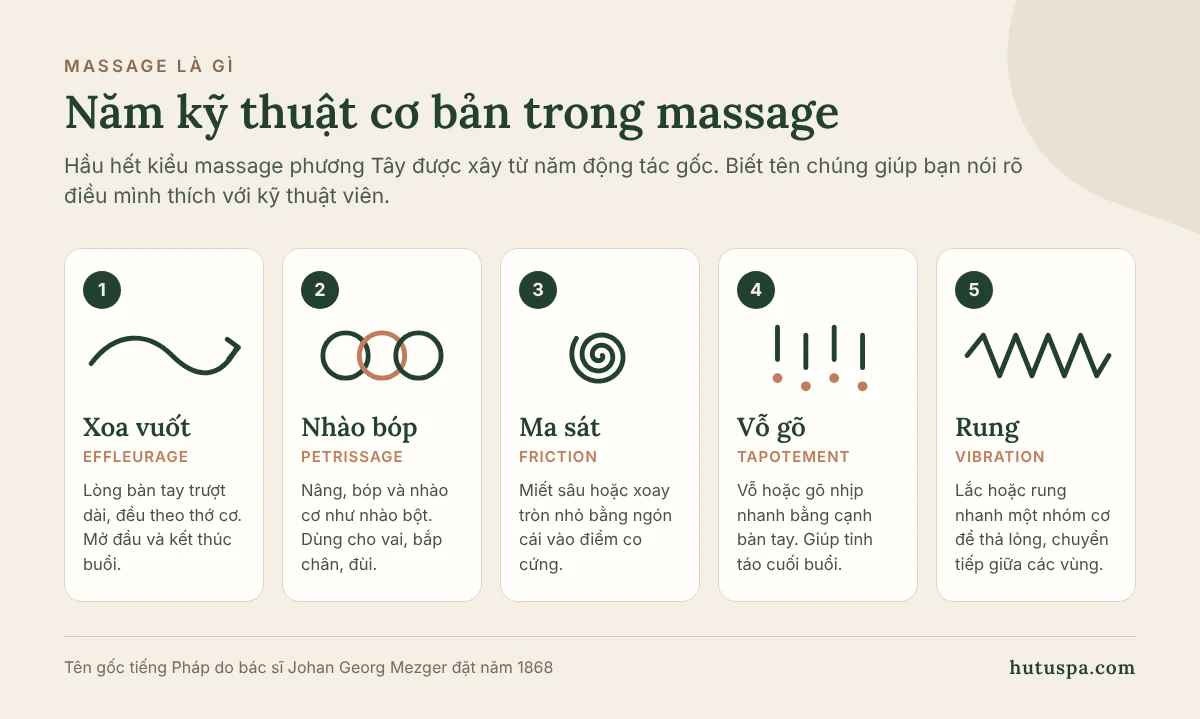
Most Western massage styles are built around five foundational movements, traditionally identified by French names associated with Mezger. Understanding these techniques helps you communicate your preferences and discomforts more clearly to your massage therapist.
| Technique | How it is performed | What it feels like | Common uses |
|---|---|---|---|
| Effleurage (gliding strokes) | The palms glide smoothly and continuously along the direction of the muscles. | Warm, gentle, and soothing. | Beginning and ending a session, and spreading massage oil. |
| Petrissage (kneading) | The therapist lifts, squeezes, and kneads the muscles in a motion similar to kneading dough. | Mild pressure or tenderness in tight areas. | Shoulders, calves, thighs, and upper arms. |
| Friction | Deep rubbing or small circular movements using the thumbs or fingertips. | Deep and concentrated on a specific spot. | Tight muscle points around the shoulder blades and lower back. |
| Tapotement (percussion) | Quick tapping or rhythmic striking using the edges of the hands or cupped palms. | Stimulating and energizing. | Toward the end of a session and in sports massage. |
| Vibration | Rapid shaking or vibrating movements applied to a muscle group. | Gentle, spreading sensations that encourage relaxation. | Transitioning between different areas of the body. |
In addition to these five movements, Eastern massage traditions may incorporate thumb pressure on specific points, acupressure along meridian pathways, and passive stretching, in which the therapist moves your arms and legs into positions similar to yoga poses. In practice, a massage session rarely relies on just one technique. A skilled therapist combines different movements and adjusts the rhythm according to your body's responses.
Popular types of massage today
There are dozens of massage styles, but most fall into four broad categories: relaxation massage, deep or specialized massage, Eastern massage, and massage focused on specific body areas. The following table provides a quick comparison before exploring each category in more detail.
| Massage type | Pressure | Uses oil | Suitable for |
|---|---|---|---|
| Swedish massage (classical) | Light to moderate | Yes | Beginners and people seeking full-body relaxation. |
| Aromatherapy massage | Light to moderate | Yes, diluted essential oils | People experiencing stress who enjoy aromatic scents. |
| Hot stone massage | Moderate, combined with warmth | Yes | People with cold hands and feet or tight shoulder and back muscles. |
| Deep tissue massage | Moderate to firm | Yes | People experiencing persistent muscle soreness and tightness. |
| Sports massage | Moderate to firm | With or without oil | Athletes, runners, and people who exercise regularly. |
| Thai massage | Moderate, combined with stretching | Usually no | People who enjoy stretching and experience tight hips or backs. |
| Shiatsu and acupressure | Moderate, focused pressure | No | People who prefer targeted pressure without massage oil. |
| Foot massage | Light to moderate | Cream or oil | People who stand for long periods, walk frequently, or travel. |
| Neck and shoulder massage | Moderate | Yes | People who spend long hours at a computer or frequently experience neck and shoulder tension. |
Relaxation massage: Swedish, aromatherapy, and hot stone
According to NCCIH, Swedish massage is the foundation of many Western massage training programs. This style uses oil and combines long gliding strokes with gentle kneading, moving systematically across different areas of the body. If you want to understand why Swedish massage is often recommended for beginners, pay attention to its rhythm: movements are steady, slow, and delivered with adjustable pressure.
Aromatherapy massage follows a similar approach, but the carrier oil is blended with essential oils such as lavender, lemongrass, or peppermint. Fragrance is an important part of the experience, so let your therapist know in advance if you have any allergies or sensitivity to scents.
Hot stone massage uses smooth stones, often volcanic stones, which are heated before being placed on or glided across the body. The warmth helps muscles relax, meaning the therapist may not need to apply excessive pressure. People with heat-sensitive skin or impaired skin sensation should inform the therapist beforehand so the temperature can be adjusted.
Specialized massage: deep tissue, sports, and trigger point
Deep tissue massage uses slow strokes and sustained pressure to reach deeper layers of muscle and connective tissue. It may be suitable for people with long-standing muscle tightness, but it is not recommended for people with osteoporosis or those who are pregnant without appropriate medical guidance.
Sports massage is designed for people who exercise regularly. It focuses on heavily used muscle groups and often incorporates stretching. Trigger point massage targets tight muscle knots that may cause pain to radiate into other areas, applying sustained pressure to help relieve discomfort.
Eastern massage: Thai, Shiatsu, Tuina, and acupressure
Traditional Thai massage is usually performed on a floor mat. Guests wear loose-fitting clothing, and no massage oil is used. The therapist uses their hands, elbows, knees, and body weight to apply pressure and guide the guest through various stretching positions.
Shiatsu originated in Japan, and its name refers to finger pressure. It focuses on applying pressure to specific points on the body. Tuina is a form of traditional Chinese therapeutic bodywork that combines pushing, pulling, kneading, and acupressure. In Vietnam, traditional acupressure and manual massage are the practices most closely related to this group.
Massage by body area: feet, neck and shoulders, head, and face
If you only have 30 to 60 minutes, a targeted massage is a practical choice. Foot massage often includes a warm foot soak, followed by massage of the feet and calves. It is particularly suitable after a long day of walking. Neck and shoulder massage focuses on areas that commonly become tense in people who work at desks. Head and facial massage are often combined with hair washing or skincare treatments.
Another option is chair massage, which is performed while guests remain seated and fully clothed. It is popular in offices, at events, and in shopping centers. This can be a comfortable introduction for people who feel hesitant about changing clothes.
What is the difference between relaxation massage and therapeutic massage?
The biggest difference is the purpose. Relaxation massage focuses on full-body care and rest, while therapeutic massage targets specific areas experiencing muscle tension or soreness. These different goals influence the pressure, treatment area, and sensations during and after the session.
| Criteria | Relaxation massage | Therapeutic massage |
|---|---|---|
| Purpose | Rest, relaxation, and stress relief. | Relieving muscle tension and soreness in specific areas. |
| Pressure | Light to moderate, with consistent movements. | Moderate to firm, gradually adjusted according to feedback. |
| Treatment area | Full body. | Focused on the neck, shoulders, back, hips, or legs. |
| Sensation during the session | Gentle and soothing, often making guests feel sleepy. | May involve some pressure or mild tenderness in tight areas. |
| After the session | A lighter, more relaxed feeling. | Mild soreness may occur the following day. |
| Examples | Swedish, aromatherapy, and hot stone massage. | Deep tissue, sports, trigger point, and neck-and-shoulder massage. |
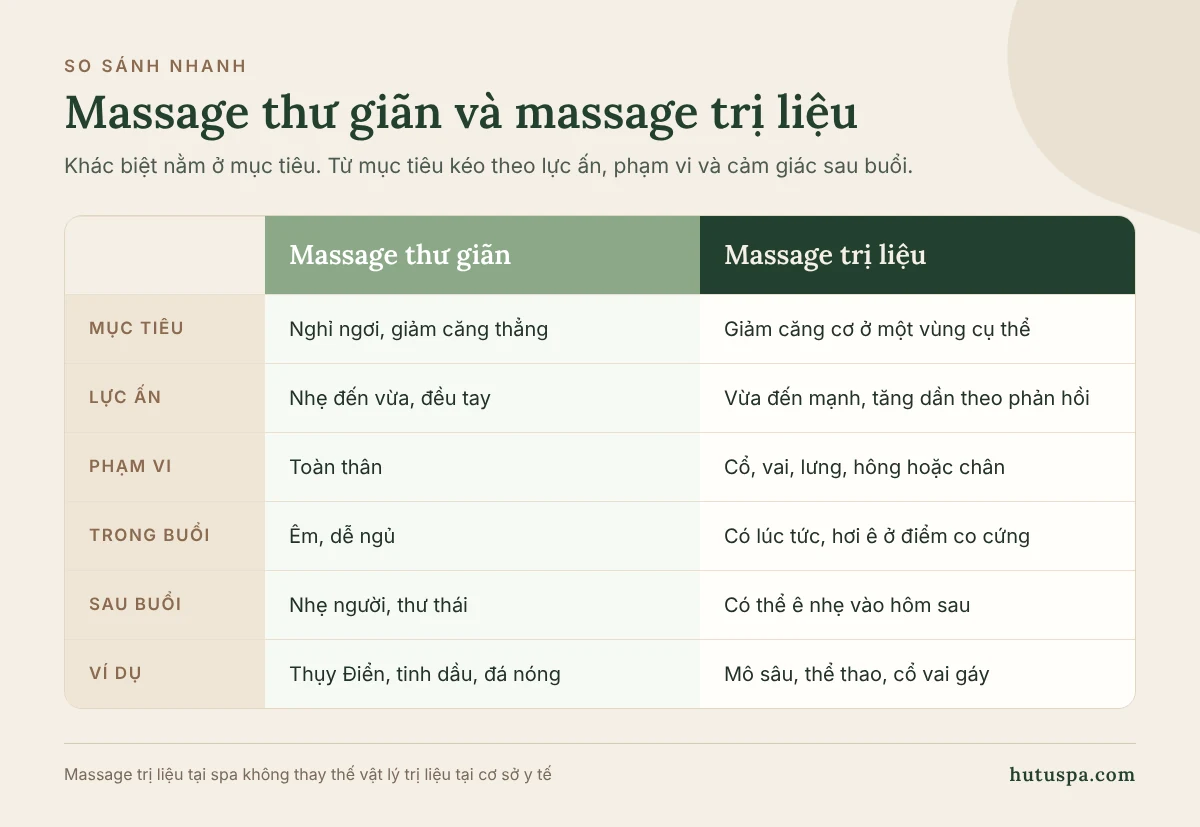
The word "therapeutic" may lead readers to associate the service with medical treatment. In reality, therapeutic massage at a spa is still a form of wellness and body care designed to make tense muscles feel more comfortable. It does not replace physical therapy at a medical facility, where doctors identify the underlying cause before prescribing appropriate exercises and treatment techniques.
A simple way to choose is to consider how you feel. If you are simply tired and want to rest, relaxation massage is a suitable option. If you can identify a specific area of discomfort, such as neck and shoulder tension after several days at a computer, therapeutic or targeted massage may be more appropriate. If pain persists for several weeks, or is accompanied by numbness, weakness in your limbs, or fever, seek medical attention first.
What are the benefits of massage? What research tells us
The clearest benefits of massage are relaxation, stress reduction, and short-term relief from muscle aches and soreness. For specific medical conditions, the strength of evidence varies, and many studies are still relatively small. Mayo Clinic also emphasizes that the benefits of massage depend on the condition being addressed and that further research is needed.
Promoting relaxation and reducing stress
This is the most common reason people book a massage. Mayo Clinic identifies stress reduction, relaxation support, and relief from muscle tension among the benefits supported by research. It also notes that massage may help reduce anxiety. Spending 60 to 90 minutes away from phones and work during a massage session can itself provide valuable time to rest and recharge.
Relieving muscle soreness and neck, shoulder, and back tension
According to NCCIH, massage may help relieve neck and shoulder pain, although the benefits are generally short-term. For lower back pain, the 2017 guidelines from the American College of Physicians included massage as an option for acute and subacute lower back pain, but not as a recommended option for chronic lower back pain. This reflects what many people experience: massage may provide relief after a few days of muscle tension, while persistent pain requires investigation of the underlying cause.
Supporting certain health conditions
The MSD Manual notes that massage may be beneficial for musculoskeletal symptoms and stress. Research has also explored its potential role in headaches, postoperative pain, chronic pain, and fibromyalgia. The following table summarizes selected findings compiled by NCCIH.
| Condition | What research suggests | Level of certainty |
|---|---|---|
| Neck and shoulder pain | May reduce pain, with benefits generally lasting in the short term. | Moderate |
| Knee osteoarthritis | Five out of six studies involving 408 participants reported short-term pain reduction. | Limited, with relatively few studies. |
| Fibromyalgia | May improve certain symptoms when treatment is continued for a sufficient period. | Limited |
| Lower back pain | Included in guidelines for acute and subacute pain, but not for chronic pain. | Low to moderate |
| Headaches and migraines | Results are inconsistent. One study of hand massage involving 83 participants found no reduction in migraine frequency. | Low |
| Pain and anxiety in people with cancer | May be part of supportive care, although the evidence is not strong. | Low |
| Premature infants | Twenty studies involving 1,250 infants evaluated weight gain, with most reporting improvements. | Moderate, specifically in medical settings. |
These findings are based on massage performed by trained practitioners, often in healthcare settings. Therefore, spa massage should be considered a complementary form of self-care rather than a replacement for medical treatment.
What massage has not been proven to do
When reading massage advertisements, you may encounter promises that go beyond what scientific research has established. Here are four of the most common misconceptions.
- Massage causes weight loss or melts fat: There is no reliable evidence that massage burns fat or causes weight loss. Body weight is still primarily influenced by diet and physical activity.
- Massage detoxifies the body: The liver and kidneys are responsible for processing and eliminating waste products. No research has demonstrated that massage pushes toxins out of the body.
- Massage cures diseases: Massage may ease symptoms such as pain, muscle tension, and stress, but it does not cure the underlying causes of disease.
- The more painful it is, the more effective it must be: Mayo Clinic clearly states that you should not experience severe pain during massage. Excessive pressure may cause muscles to tense up and can result in bruising.
A trustworthy spa will present massage as a way to relax and care for your body, rather than promising to cure diseases or guaranteeing a specific amount of weight loss after a treatment course.
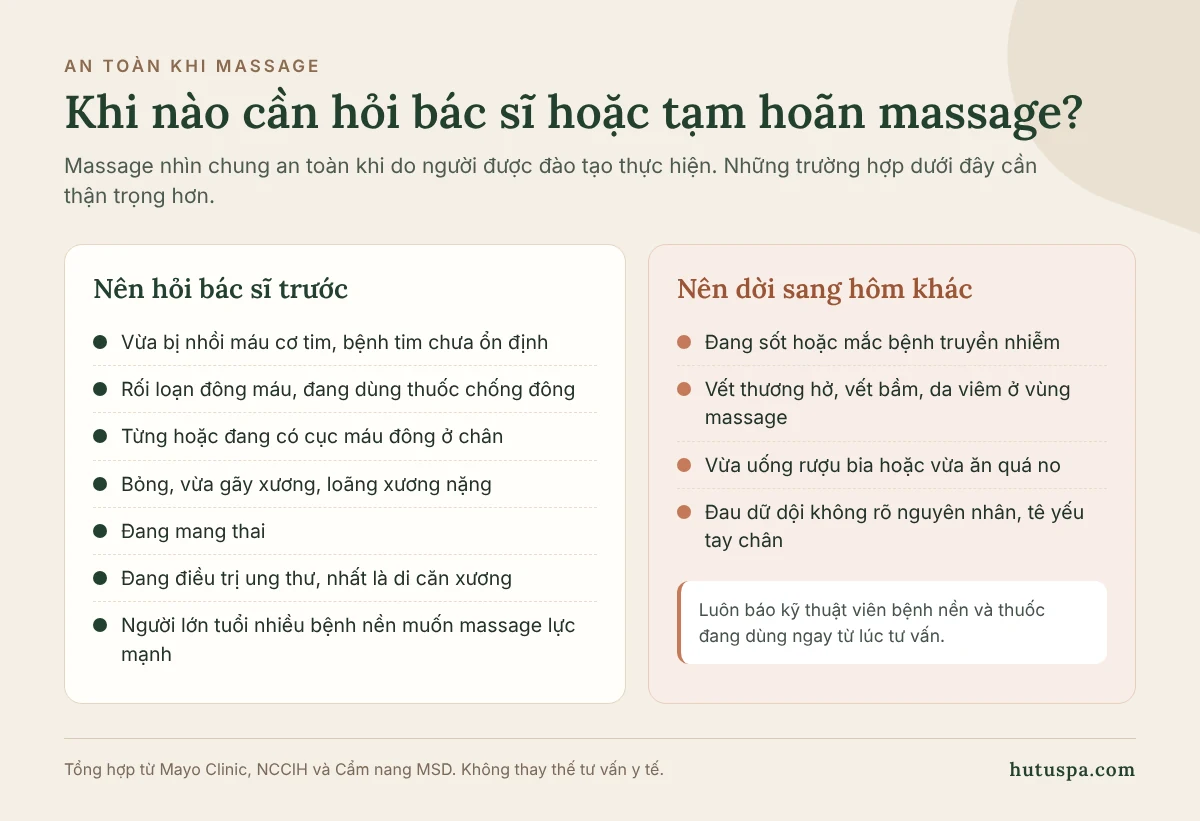
Who should avoid massage or consult a doctor first?
Massage is generally safe when performed by a trained professional, and serious side effects are very rare, according to Mayo Clinic. NCCIH also considers the risk of harm to be low, while noting that rare cases of blood clots, nerve injuries, and fractures have been associated with vigorous massage or people with higher risk factors, such as older adults. For this reason, certain individuals should consult a doctor before booking or consider postponing their appointment.
People who should consult a doctor before massage
- People who have recently experienced a heart attack or have an unstable heart condition.
- People with bleeding disorders, low platelet counts, or those taking anticoagulant medication. The MSD Manual notes that massage may cause bruising and bleeding in these individuals.
- People who have had or currently have blood clots in their legs (deep vein thrombosis).
- People with burns, recent fractures, or severe osteoporosis.
- People who are pregnant. Once approved by a doctor, choose a spa with therapists trained in prenatal massage.
- People undergoing cancer treatment, especially those with cancer that has spread to the bones. The MSD Manual advises therapists to avoid applying pressure to bones affected by osteoporosis or metastatic cancer.
- Older adults with multiple underlying health conditions, particularly those considering firm-pressure massage.
When should you postpone a massage session?
- If you have a fever or a contagious illness.
- If you have open wounds, bruises, scratches, inflamed skin, or an infection in the area you want massaged.
- If you have recently consumed alcohol or eaten an excessively large meal.
- If you experience severe pain of unknown origin, pain accompanied by numbness or weakness in your limbs, or pain with fever. NCCIH advises against using massage to delay medical evaluation when health problems are present.
Even when you are otherwise suitable for massage, therapists should never apply direct pressure to tumors, healing wounds, or areas affected by nerve damage. The safest approach is to be honest about your health condition during the initial consultation, including any medications you are taking.
What happens during a spa massage session?
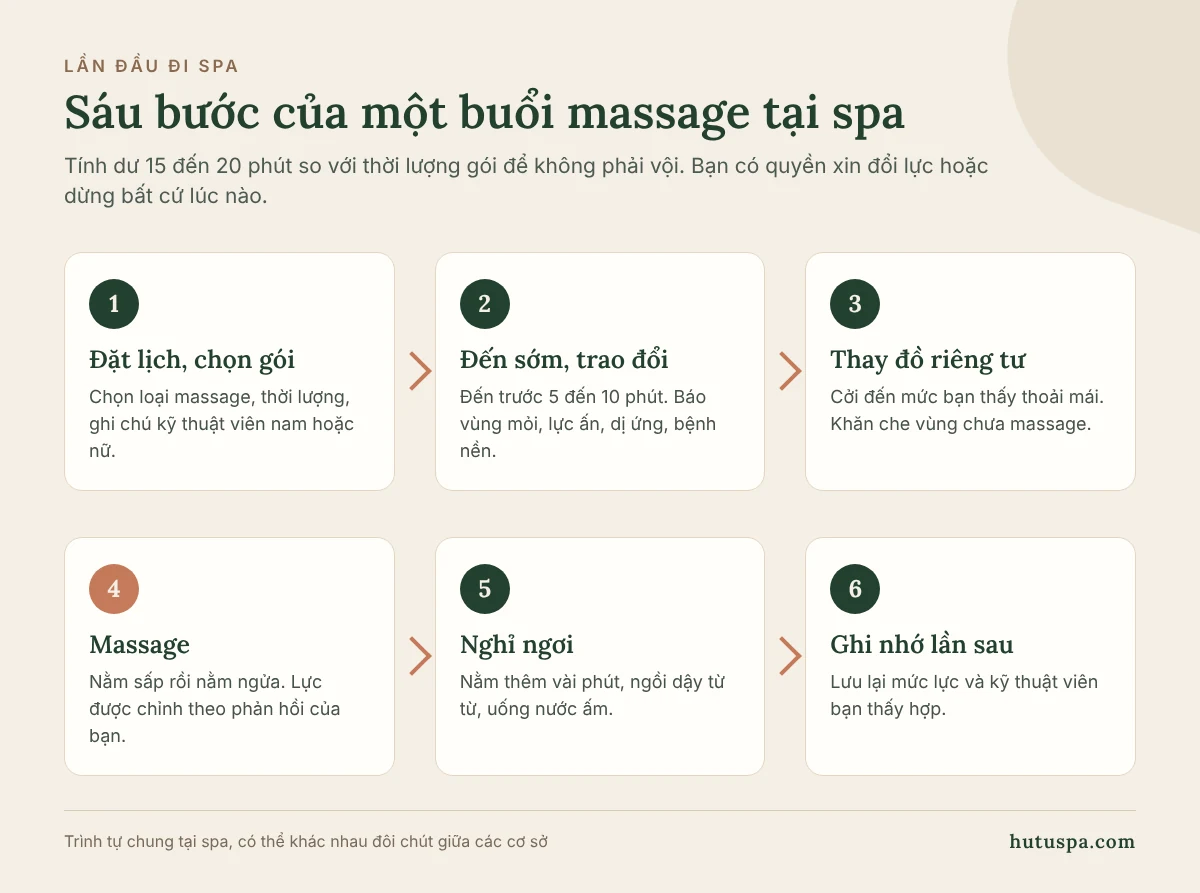
A typical spa massage session involves six steps, from discussing your needs to resting afterward. It is a good idea to allow an additional 15 to 20 minutes beyond the treatment duration so you do not feel rushed.
- Book an appointment and choose a treatment. Select your preferred massage type and duration. Mention any preferences, such as a male or female therapist, or whether you need a room for two people.
- Arrive early and discuss your needs. Try to arrive 5 to 10 minutes before your appointment. Tell the therapist about any sore areas, your preferred pressure level, essential oil allergies, underlying health conditions, medications, and pregnancy if applicable.
- Change in privacy. The therapist will leave the room while you change. You only need to remove clothing to the extent that you feel comfortable, then lie down and cover yourself with a towel or sheet. During the massage, only the area being treated will be uncovered.
- The massage begins. The session usually starts with you lying face down and then moves to a face-up position. If lying on your stomach is uncomfortable, you can lie on your side with supportive pillows. The therapist uses oil or cream to reduce friction and adjusts pressure according to your feedback.
- Finish and rest. Take a few extra minutes to relax, sit up slowly to avoid dizziness, and enjoy some warm water or tea.
- Payment and notes for next time. If you enjoyed a particular pressure level or therapist, make a note so you can request the same experience next time.
For people experiencing their first massage session, the biggest concerns are often changing clothes and not knowing what to say to the therapist. Remember that you always have the right to keep your underwear on, request lighter or firmer pressure, skip an area you do not want touched, or stop the session at any time. It is also perfectly normal to remain quiet throughout the treatment.
Does massage hurt? How to choose the right pressure
A properly performed massage should not cause severe pain. According to Mayo Clinic, applying pressure to tight muscle points may feel slightly uncomfortable, but if you experience pain, you should inform your therapist immediately so they can reduce the pressure.
| Pressure level | What it should feel like | Suitable for |
|---|---|---|
| Light | Smooth, warm, and gentle, almost like a caress. | Beginners, older adults, people with sensitive bodies, and aromatherapy massage guests. |
| Moderate | Mild pressure in tight areas while still allowing you to breathe normally and relax. | Most people, including those choosing Swedish, hot stone, and neck-and-shoulder massage. |
| Firm | Noticeable pressure that requires you to consciously relax and breathe steadily. | People familiar with massage, those with significant muscle tightness, and guests choosing specialized deep tissue massage. |
Signs that the pressure is too strong include holding your breath, tensing your muscles, grimacing, experiencing sharp pain, or feeling numbness radiating into your arms or legs. In these situations, simply saying "A little lighter, please" is enough. After a massage, particularly deep tissue massage, you may experience mild soreness the following day. This usually improves on its own. If pain becomes progressively worse or you notice swelling or extensive bruising, seek medical attention.
How often should you get a massage, and how long should each session last?
There is no single standard that works for everyone. According to Mayo Clinic, a massage session can last anywhere from 15 to 90 minutes, depending on the treatment type and your available time. At spas, common packages typically last 30, 60, 90, or 120 minutes.
Should you choose 30, 60, 90, or 120 minutes?
- 30 minutes: Enough for a targeted area such as the feet or neck and shoulders. Suitable when you have limited time.
- 60 minutes: A basic full-body massage and a good starting point for beginners.
- 90 minutes: Allows time for a full-body massage with additional attention to areas experiencing tension. It is often the most balanced option for body massage.
- 120 minutes: Suitable for a day off, combining multiple techniques, or enjoying a particularly slow and relaxing session.
Suggested frequency based on your needs
If your main goal is relaxation, many people schedule a massage once every two to four weeks. If your muscles are particularly tight and sore, you may choose more frequent sessions for a short period, then gradually space them out as you feel better. People with underlying health conditions should consult their doctors about an appropriate frequency. The best measure is still how your body feels during the days following each session.
How to choose a safe and reputable massage spa
A legitimate massage spa provides relaxation and body care services. A trustworthy establishment offers transparent information, clean private treatment rooms, and a health consultation before beginning the session.
In Vietnam, massage services fall under business sectors subject to specific public security and order requirements under Decree No. 96/2016/ND-CP and its subsequent amendments. In other words, massage establishments must meet additional requirements beyond ordinary business registration. You do not necessarily need to inspect the legal documents yourself, but you can look for the following six easily observable signs.
- Clear business information: The spa provides a specific address, opening hours, phone number, and genuine customer reviews on Google Maps.
- Transparent pricing: Prices are listed according to treatment duration, with clear details of what is included and no unexplained additional charges.
- Consultation before treatment: Staff ask about your health, areas of discomfort, and preferred pressure before starting.
- Cleanliness and privacy: Treatment rooms are clean, towels and sheets are replaced for every guest, and essential oils have clear sources.
- Respect for personal boundaries: Towels cover areas that are not being treated. Guests can request lighter pressure, change therapists, or stop the session whenever they wish.
- No services outside the advertised menu: Reputable establishments do not pressure guests into purchasing unlisted services or long-term treatment packages.
When traveling, you may have limited time to research different establishments. You can use these criteria for choosing a reputable spa to quickly narrow down your options. Check reviews from other travelers, proximity to your hotel, and booking arrangements, then contact the spa to confirm prices and available massage treatments.
Massage at Hutu Spa Nha Trang
Hutu Spa is located at 5 Hong Bang Street, Nha Trang Ward, Khanh Hoa Province, Vietnam. The spa is open daily from 10:00 AM to 10:00 PM, with the last appointment accepted at 9:00 PM. Its menu includes treatments ranging from relaxation to specialized massage, using naturally sourced essential oils, with packages lasting 30, 60, 90, and 120 minutes.
The following table shows the prices listed on the spa's website as of November 16, 2026, including current promotional offers. The 60-minute package has the same price throughout the week, while the 90-minute packages are less expensive on weekdays.
| Treatment | Suitable for | 60 minutes (all week) | 90 minutes (Monday to Friday) | 90 minutes (Saturday and Sunday) |
|---|---|---|---|---|
| Hutu Signature Massage (essential oils and warm volcanic stones) | Beginners and people seeking full-body relaxation. | VND 340,000 | VND 460,000 | VND 520,000 |
| Aroma Essential Oil Massage | People experiencing stress who enjoy aromatic scents. | VND 310,000 | VND 440,000 | VND 480,000 |
| Thai Massage | People who enjoy assisted stretching. | VND 390,000 | VND 540,000 | VND 590,000 |
| Deep Tissue Essential Oil Massage | People experiencing long-standing muscle tightness. | Available only in 90- and 120-minute packages. | VND 610,000 | VND 680,000 |
| Neck and Shoulder Massage | People who spend long hours working at a computer. | VND 370,000 | VND 440,000 | VND 480,000 |
| Foot Massage | Travelers who spend a lot of time walking. | VND 240,000 | VND 325,000 | VND 370,000 |
The shortest available packages are a 30-minute foot massage for VND 140,000 and a 30-minute neck and shoulder massage for VND 230,000. The spa also offers gentle massage for children under 10, with a 60-minute package priced at VND 260,000. Prices are the same for male and female guests. As prices may change depending on promotional offers, please check the Hutu Spa price list or call the spa before visiting.
Here are some quick recommendations if you are unsure which treatment to choose:
- First-time massage guests: Hutu Signature or 60-minute Aroma Essential Oil Massage.
- Neck and shoulder tension from working at a computer: 30- or 60-minute neck and shoulder massage.
- After a full day of sightseeing in Nha Trang: 60-minute foot massage.
- If you enjoy stretching and feel physically stiff: 90-minute Thai massage.
- For long-standing muscle tightness if you are already familiar with massage: 90-minute deep tissue massage.
Book through the hotline or Zalo at 0396 161 183, or email hutuspa.nhatrang@gmail.com. The spa website is available in five languages: Vietnamese, English, Korean, Russian, and Chinese.
Frequently asked questions about massage
What is the difference between massage and acupressure?
Massage is a broad term covering various movements such as rubbing, stroking, and kneading larger areas of the body, often with oil. Acupressure is a technique from Eastern medicine that uses finger pressure on specific points and generally does not require oil. Many spa treatments combine both methods. For example, foot massage may include acupressure on specific points of the feet.
Can massage help you lose weight?
No. There is no reliable evidence that massage burns fat or causes weight loss. Massage may help you relax and recover after exercise, but body weight is still primarily influenced by diet and physical activity.
Do you need to remove all your clothes during a massage?
No. You only need to remove clothing to the extent that you feel comfortable, and you can keep your underwear on. For oil-based massage, the therapist covers you with a towel or sheet and only uncovers the area being treated. For Thai massage, chair massage, or foot massage, you can remain fully clothed or wear the loose-fitting clothing provided by the spa.
How long should you wait after eating before getting a massage?
Avoid eating a heavy meal immediately before your session because lying face down with a full stomach may cause discomfort. A light meal approximately one hour beforehand is a reasonable choice. However, do not arrive extremely hungry, as you may feel dizzy when sitting up after the treatment.
Is it normal to feel sore the day after a massage?
According to Mayo Clinic, you may experience mild soreness the following day, depending on the type of massage. Slight tenderness after deep tissue massage is relatively common and usually goes away on its own. If pain becomes worse, swelling develops, bruising spreads, or you experience numbness or weakness in your limbs, seek medical attention and choose lighter pressure for your next session.
Can pregnant women receive massage?
Yes, in some cases, but it is best to consult an obstetrician first. Mayo Clinic recommends discussing massage with a healthcare professional during pregnancy. Once approved, choose a spa with therapists trained in prenatal massage. Side-lying positions are generally preferred, and deep tissue massage should be avoided unless specifically approved by a qualified healthcare professional.
Can children receive massage?
Yes. Children can receive gentle massage using shorter sessions than those intended for adults, with a parent or guardian present. Parents should inform the therapist about the child's health conditions and skin allergies, and the session should stop immediately if the child feels uncomfortable. Massage should be postponed if the child has a fever, wounds, or a skin condition.
Conclusion
Massage is a practice that uses manual techniques to work on soft tissues, helping the body relax, reducing muscle tension, and easing aches and soreness. With a history spanning thousands of years, it has developed into many different styles and traditions. The real value of massage lies in helping you feel physically lighter, mentally calmer, and more comfortable in tense muscle areas, rather than in exaggerated promises about weight loss or detoxification.
If you are new to massage, start with a 60-minute relaxation session using moderate pressure. Tell your therapist about your health conditions and never hesitate to ask for pressure adjustments. If you are in Nha Trang and would like to try a massage, Hutu Spa at 5 Hong Bang Street is open daily until 10:00 PM. You can call or message via Zalo at 0396 161 183 to receive recommendations on the most suitable treatment before visiting.
This article is for informational purposes only and does not replace professional medical advice. If you have an underlying health condition or are undergoing medical treatment, consult your doctor before receiving massage.